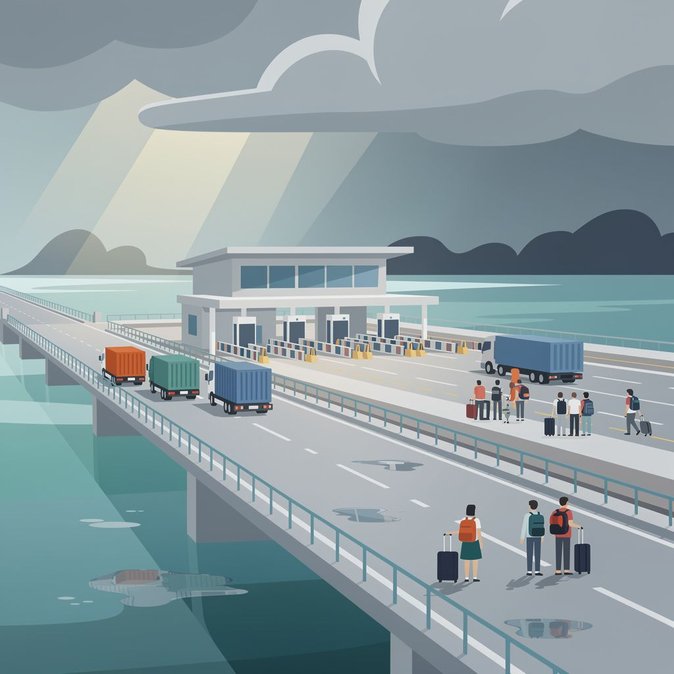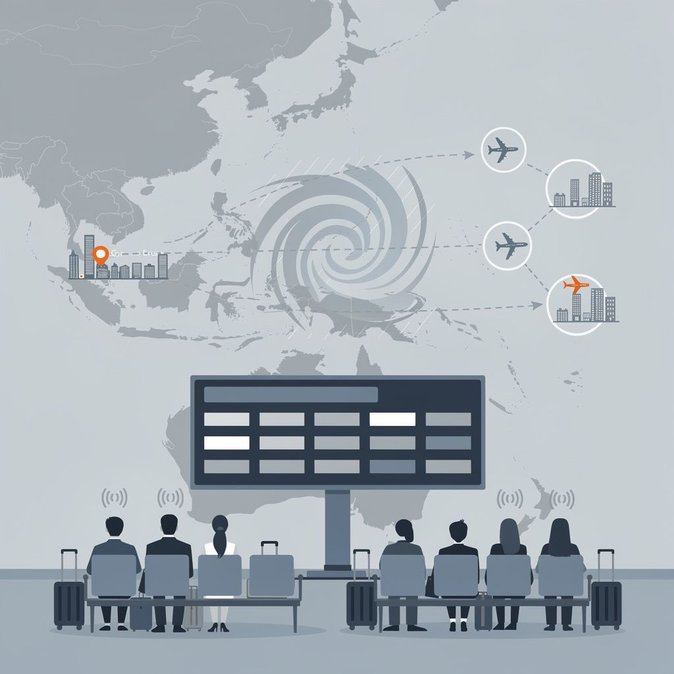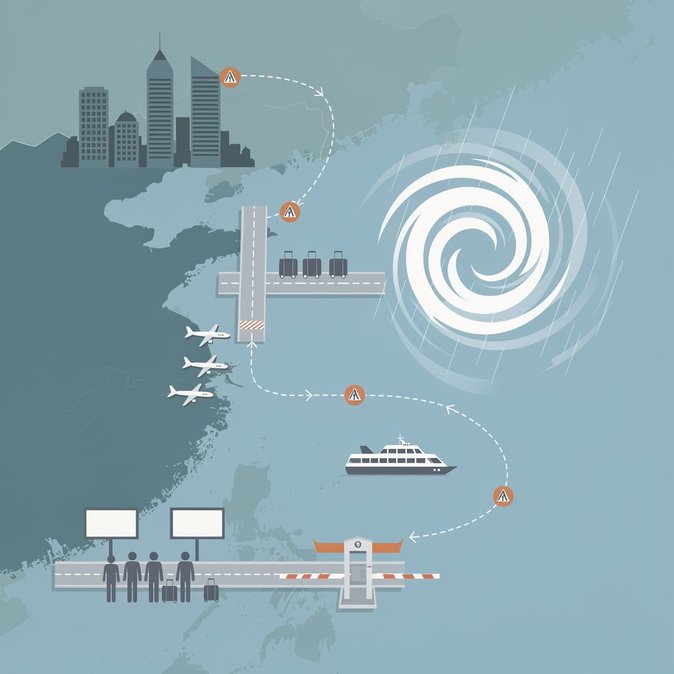
Southern China’s busiest travel corridors were paralysed overnight after Typhoon Hongxia—known internationally as Noul—roared ashore near Huizhou, Guangdong, at 03:50 on 26 July. The category-strong storm packed sustained winds of 110 kph and forced the evacuation of more than 715,000 residents across Guangdong province while Hong Kong raised its hurricane signal to No. 9 for the first time this year. Aviation bore the immediate brunt. Hong Kong International Airport cancelled some 350 flights on 25–26 July, joining Shenzhen Bao’an, Guangzhou Baiyun and Zhuhai airports, which curtailed dozens of services as cross-border air-traffic flow control was imposed. Cargo operations were suspended and airlines advised passengers bound for any Pearl River Delta hub to defer non-essential travel. Road and rail links were equally strained. Sections of the Guangzhou–Shenzhen–Hong Kong Express Rail Link were slowed, while high-speed ferry operators halted sailings between Hong Kong, Macau and the mainland. The National Immigration Administration (NIA) activated contingency protocols at 15 land and sea checkpoints, redeploying officers to shelter travellers left stranded when crossings were closed. For multinational companies with South China operations, the storm is a reminder to review business-continuity plans before the region’s peak typhoon season. Travel managers were urged to keep staff informed through airline apps and the NIA’s 12367 hotline, and to budget extra transit days for relocating assignees or time-sensitive cargo for at least the next 48 hours while backlogs clear. Hong Kong’s Observatory expects the system to weaken rapidly over Guangdong’s interior, allowing airports to restart phased departures late on 27 July. Nevertheless, residual rain bands could still trigger last-minute delays—particularly for wide-body long-haul departures that require longer weather windows—so travellers should reconfirm schedules before heading to the airport.
Source: Associated Press