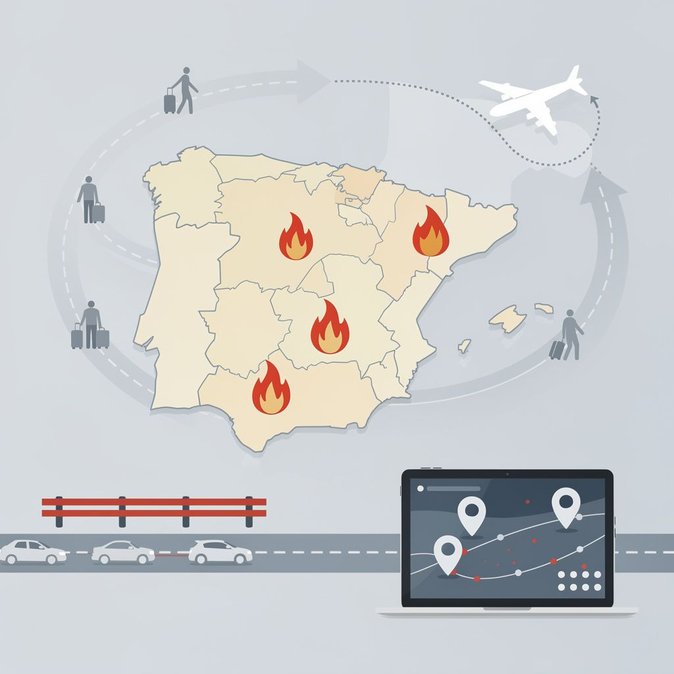
Spain’s Civil-Protection Secretariat warned on 27 July that a fourth consecutive heatwave will grip the country from Wednesday through at least 2 August. Forecasts show daytime highs of 41 °C in the Guadalquivir and mid-40s in the Ebro valley, while Gran Canaria could break 37 °C. Extreme temperatures threaten both human comfort and transport resilience. ADIF says rail tracks can expand by up to 14 cm in prolonged heat; speed restrictions may therefore apply on the AVE network between Zaragoza and Barcelona as well as the Madrid-Seville corridor. Aena has placed additional asphalt-cooling units at Málaga-Costa del Sol airport after last week’s tarmac softening forced an hour-long runway closure. Employers must comply with Royal Decree-law 4/2023, which obliges companies to reschedule outdoor work or provide shaded rest every hour once AEMET issues orange or red alerts. Failure to adapt the working day now carries fines of up to €60,000 in severe cases. Assignees who drive long distances should note that fuel vapour-lock incidents rise 30 % in heatwaves; many rental-car firms waive one-way fees during official alerts so travellers can avoid peak-heat hours. Civil Protection also highlights heightened wildfire risk, urging companies to postpone non-essential field visits to rural client sites and to equip fleet vehicles with 6-litre fire extinguishers. Event organisers in Sevilla and Zaragoza are moving evening corporate functions indoors to maintain comfort and comply with municipal water-restriction bylaws. Travellers should carry reusable water bottles—security officers at Madrid-Barajas now allow empty containers through screening—and consult AEMET’s ‘ola de calor’ map before planning overland trips.
Source: Protección Civil y Emergencias