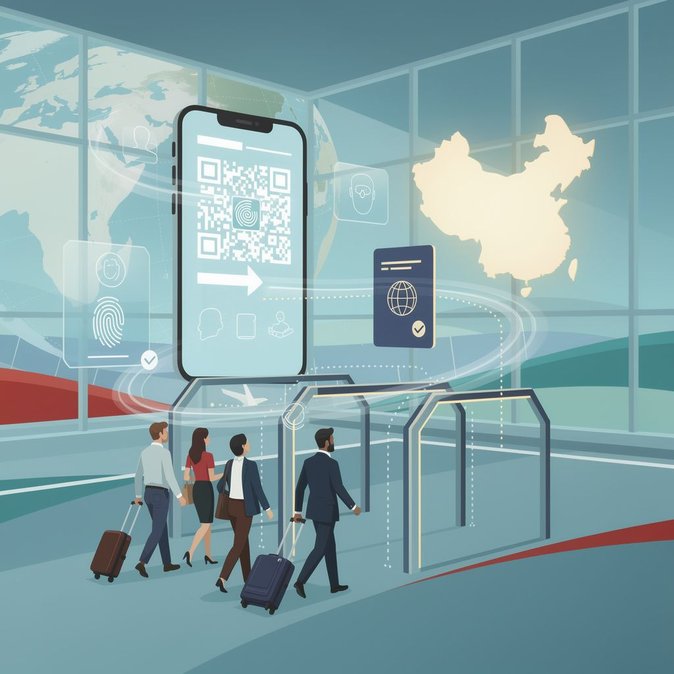
China’s National Immigration Administration (NIA) used a State Council Information Office (SCIO) press briefing on 27 July to outline the next phase of the country’s unilateral visa-free strategy. A senior NIA official said the government will “refine visa-free transit and entry programmes” for the 55-country scheme and roll out fully digital border-crossing services, including mobile pre-clearance, facial-recognition e-gates and multilingual arrival-card apps. The upgrades are due to be piloted at Beijing Capital, Shanghai Pudong and Guangzhou Baiyun airports before the National Day holiday in October. Under the plan, foreign travellers will be able to complete customs declarations, health declarations and hotel registration in a single smartphone workflow that generates a QR-code for inspection on arrival. The NIA also pledged to shorten the processing time for residence-permit extensions from seven to three working days and to expand 24-hour “foreigner service windows” in free-trade zones and major science parks. The push comes on the back of a sharp rebound in inbound travel. Official data show China handled 369 million cross-border movements in the first half of 2026, while visa-free entries surged 30.6 % year-on-year to 17.8 million—accounting for 77.7 % of all foreign arrivals. Airports in Shanghai alone processed more than 2 million foreign visitors under the visa-free regime in H1, according to municipal figures. For multinationals the message is clear: China is doubling down on mobility openness after three years of pandemic-driven closure. Faster border formalities will cut travel lead-times for executives and project teams, and the wider use of electronic documents should reduce the administrative burden on HR and global-mobility managers. Companies are advised to update their travel policies to reflect the forthcoming digital procedures and to brief travellers on the continued requirement to register accommodation within 24 hours of arrival. Travel-management providers should integrate the new NIA application programming interface (API) once it is released later this year.
Source: Xinhua via SCIO