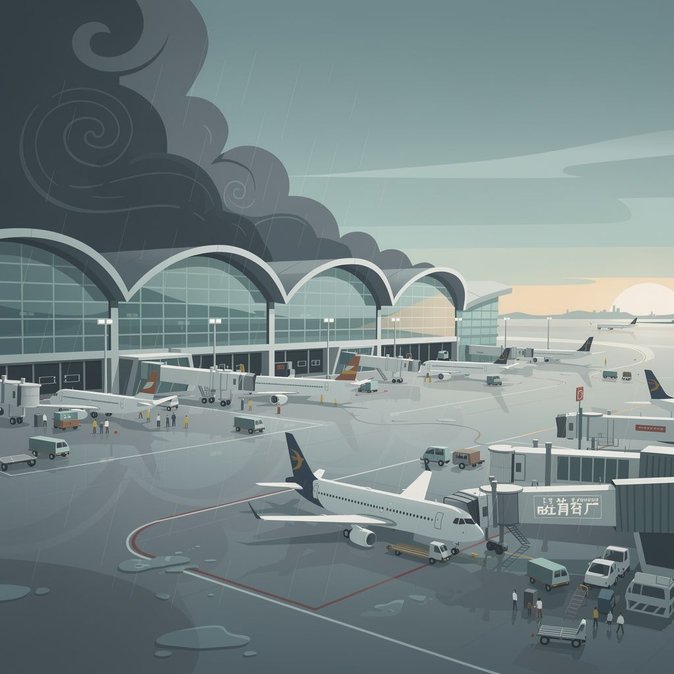
Operations at Hong Kong International Airport (HKIA) returned to near-normal on 27 July after Typhoon Noul forced the cancellation of about 400 flights over the weekend, stranding thousands of passengers. The Airport Authority said it expected to handle 900 flights throughout Monday, though at least a dozen departures remained delayed as airlines repositioned aircraft and crews. Cathay Pacific, China Eastern and several foreign carriers have reinstated their full schedules, but mobility planners should anticipate residual seat shortages on popular regional routes such as Hong Kong–Shanghai and Hong Kong–Singapore through mid-week. Cargo backlogs are also being prioritised, which could bump lower-yield passenger services. The storm delivered Hong Kong’s first No 8 and No 9 tropical-cyclone signals of 2026, leading to widespread rail and ferry suspensions. Corporate travellers whose itineraries were disrupted can claim waivers under most airlines’ Atlantic or Asia-Pacific irregular-operations policies; HR should collect delay certificates issued by HKIA for insurance purposes. With the typhoon season only beginning, companies should review contingency plans that include remote-work options, flexible ticketing classes and real-time travel-tracking tools. The Hong Kong Observatory advises monitoring Signal No 1 and No 3 alerts, as flight operations can be affected before the higher warnings are issued.
Source: South China Morning Post