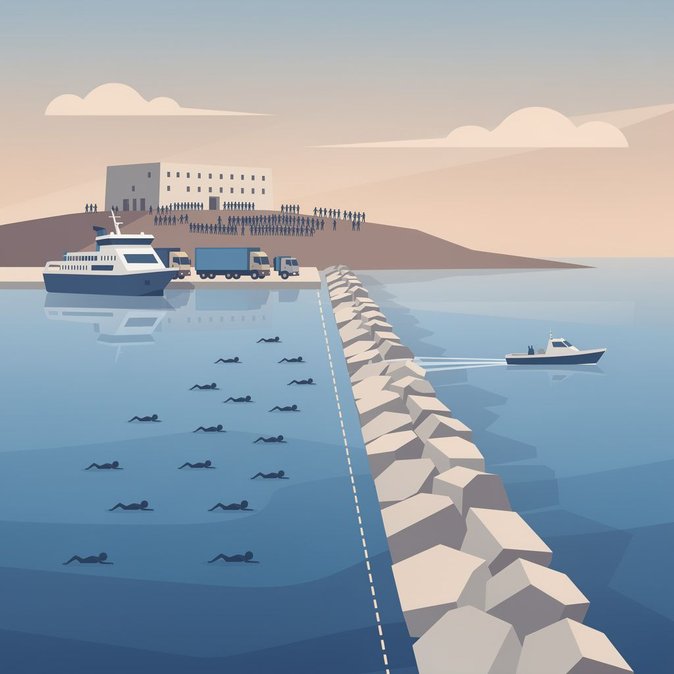
Ceuta’s maritime border with Morocco saw another rash of risky crossings overnight on 27 July when at least 15 Moroccan and Algerian nationals reached Spanish soil by swimming around the Tarajal breakwater. Local newspaper La Verdad de Ceuta reports that more than 50 people attempted the crossing under calm seas; most were intercepted by Morocco’s Royal Navy, but a handful slipped through and were transferred to the city’s overcrowded Reception and Temporary Stay Centre (CETI). The incident is the latest flash-point in a summer that has already claimed four lives off Ceuta’s coast, according to the Guardia Civil. Political parties across the spectrum have urged Madrid to reinforce maritime patrols and to clarify procedures after Spain’s Supreme Court last month barred push-backs of migrants intercepted in open water. For logistics firms moving freight through the Strait of Gibraltar, security alerts translate into longer waiting times at the land border and potential last-minute ferry cancellations. Tour operators running day-trips to Tangier are advising clients to carry passports at all times and to check crossing schedules up to the minute. From a policy perspective, the incident underscores the challenge of balancing humanitarian considerations with border security. Spain is investing €12 million this year in sensor upgrades along the Ceuta breakwater—contracts that include thermal cameras capable of detecting swimmers at night—but the system is not expected to be fully operational until 2027. Local NGOs, meanwhile, are calling for expanded legal pathways such as seasonal-work visas to reduce dangerous maritime attempts. Whether such proposals gain traction may depend on the early performance of the EU’s new screening rules, which require fingerprinting of all irregular arrivals within 24 hours.
Source: La Verdad de Ceuta