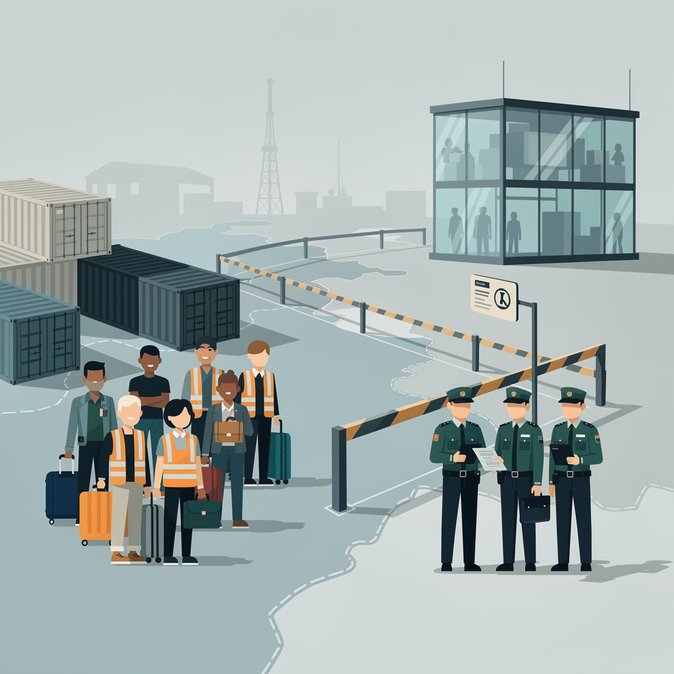
The Silesian Division of Poland’s Border Guard published the results of a two-day enforcement blitz that netted 28 foreigners without valid immigration status. The largest single action took place in Częstochowa, where officers and labour inspectors entered a logistics warehouse and found ten Colombian nationals, two Indonesians and an Iraqi working without the required permits or residence titles. Parallel patrols across the region detained another 15 people from Moldova, Uzbekistan, Vietnam, Kazakhstan, Tajikistan, Georgia and Venezuela. Most of those held had either overstayed the 90-in-180-day Schengen limit or were working in roles not covered by their initial purpose-of-stay declarations. Fifteen have already received administrative return decisions with three-year Schengen re-entry bans; the remainder face expedited proceedings this week. The Silesian Border Guard says it has issued 1,501 return orders since January—an 18 % increase year on year—citing continued demand for warehouse and light-manufacturing labour around Katowice and Wrocław Airports. For employers the message is clear: controls on labour legality are intensifying beyond classic high-risk sectors such as construction and agriculture. Penalties for illegal employment were stiffened in 2025 and now reach PLN 50,000 per worker plus potential criminal liability for company directors. Mobility teams should audit subcontractors and staffing agencies to ensure that each foreign employee holds the correct type of work permit (type A, C or seasonal statement) and that copies are kept on site, as inspectors increasingly make unannounced visits. The sweep also demonstrates Poland’s coordination with Schengen partners. Several Colombians were already subject to entry bans issued by Germany, and information obtained in Częstochowa has been shared via the European Migratory Analysis Network (EMAS) to identify potential facilitators. Companies moving goods through the Silesian logistics hub can expect random ID checks on drivers and warehouse shift staff throughout August. HR departments should brief affected workers, keep original passports on file, and budget extra time for airport departures as overstayers are increasingly flagged at exit by the Entry/Exit System (EES).
Source: Śląski Oddział Straży Granicznej