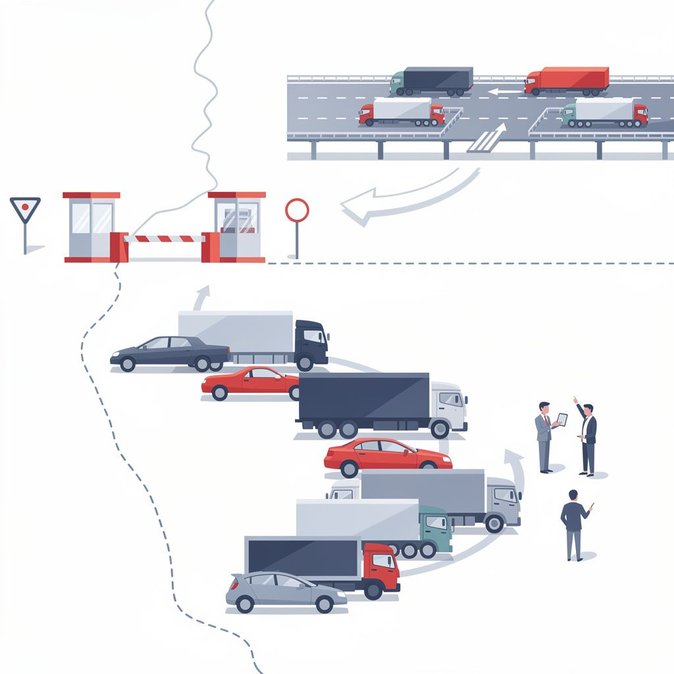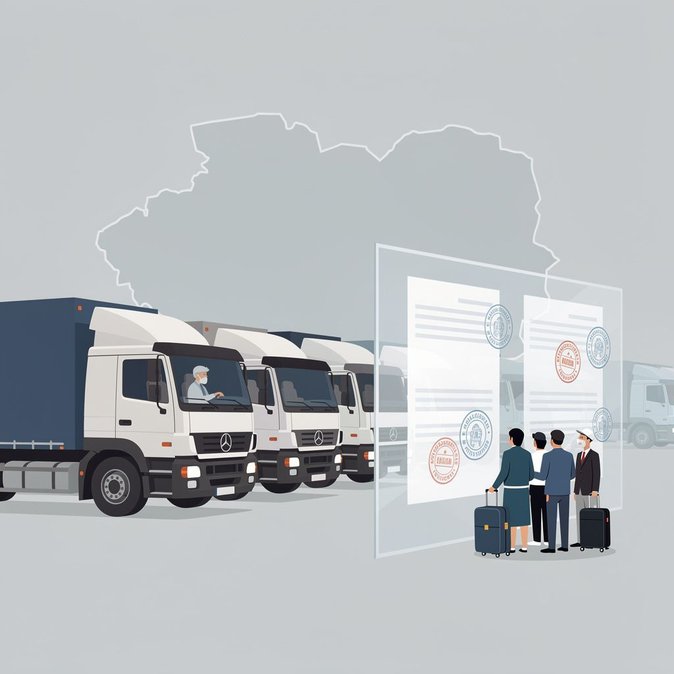
Trade daily "Puls Biznesu" reported—and the Polish Press Agency (PAP) relayed—industry warnings that road-freight companies are short about 120,000 licensed drivers, a figure projected to hit 150,000 by 2030. Interviews with operators MagTrans and Dartom blame the shortage on an ageing workforce: drivers under 25 make up only three per cent of the pool. Many smaller haulage firms are closing when even a handful of resignations leave trucks idle. The sector’s resilience masks the problem because surviving companies appear busier, skewing macro indicators. Transport unions say domestic recruitment campaigns have limited effect; employers increasingly look to third-country nationals, notably from Ukraine, Belarus, Georgia and the Philippines, yet processing times for category C+E licence recognition and work permits can exceed three months. The gap has direct consequences for supply-chain managers. Poland is a pivotal east-west logistics hub; driver scarcity inflates spot-haulage rates and complicates just-in-time delivery for automotive and retail importers. Multinationals with in-house fleets are lobbying for streamlined recognition of third-country licences and accelerated work-permit procedures. Policy makers are under pressure to act. Business groups propose extending the fast-track seasonal-work scheme beyond agriculture and introducing English-language driver-theory exams. If nothing changes, industry analysts warn that Poland could forfeit its competitive edge in EU road freight to neighbouring Slovakia or Lithuania, both of which are liberalising licence-conversion rules.
Source: Polska Agencja Prasowa (PAP)