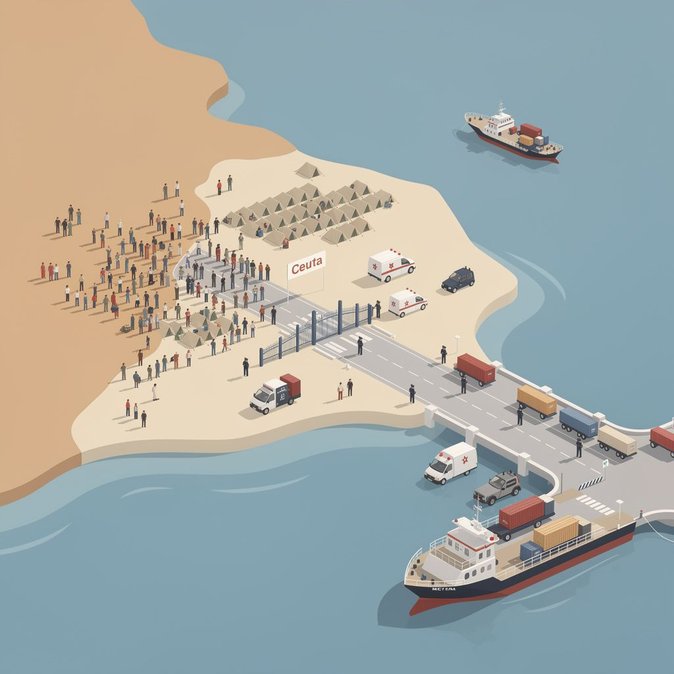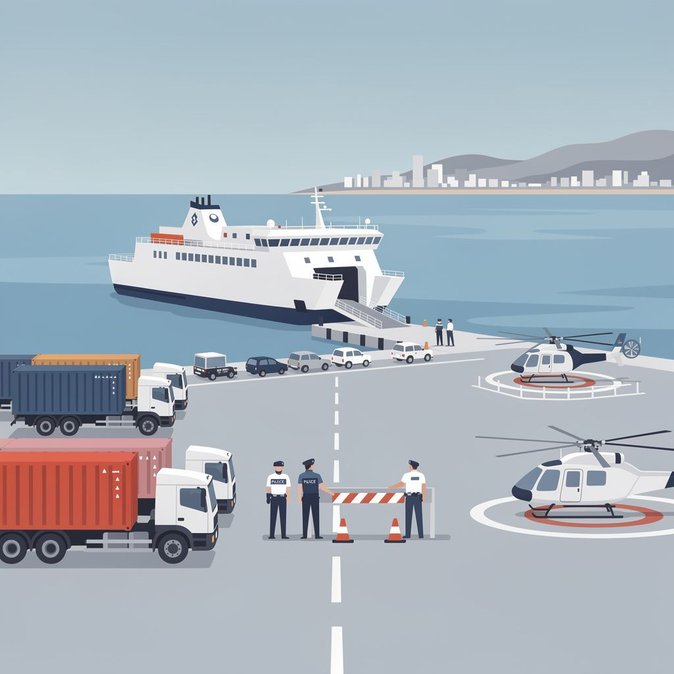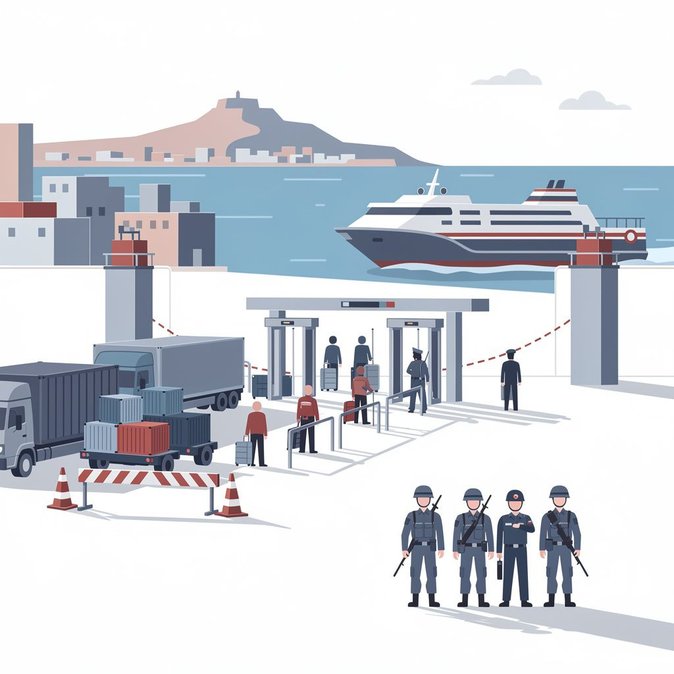
With local police and Guardia Civil units overstretched, Defence Minister Margarita Robles on 31 July ordered the immediate deployment of up to 3,000 members of the Army’s Ceuta garrison – chiefly the ‘Duque de Alba’ 2nd Tercio of the Legion – to secure the perimeter fence, the El Tarajal crossing and strategic sites such as the desalination plant and fuel depot. The mission is carried out under the ‘Support to Civil Authorities’ protocol and places troops under Guardia Civil operational command. The military build-up is designed to deter further mass entries, free police officers for identification tasks and reassure the 84,000 residents of the enclave, many of whom reported panic-buying and isolated looting incidents on Thursday night. Commerce chambers say 70 % of small shops remained closed on Friday morning, a blow for a city that relies heavily on weekend visitors from mainland Spain. From a mobility perspective, the army presence allows the reopening of Ceuta’s heliport and partial restoration of ferry services. Nevertheless, travellers face airport-style screening at both the maritime terminal and the Tarajal road crossing. Logistics convoys must pre-register driver and cargo data 12 hours in advance, while passenger vehicles will be channelled through a single gated lane. Businesses moving time-sensitive goods (e.g. automotive components bound for Tangier’s free-trade zone) are warned to expect at least 4-hour dwell times until the situation stabilises. Legal advisers note that the deployment could trigger ‘force majeure’ clauses in contracts governed by Spanish law, potentially excusing delivery delays. Companies employing cross-border workers should also brace for ad-hoc ID checks inside the city, and ensure that staff carry residencia or NIE documentation at all times. The Social Security Treasury has reminded employers that tele-working from Morocco does not count as Spanish social-security coverage unless an A1 certificate is in place. Analysts say the operation underscores Spain’s willingness to securitise migration flows and could embolden other EU states to demand tougher external-border controls. For the private sector, the key takeaway is that military involvement does not automatically translate into fluid trade; contingency routing and extra lead-time remain critical.
Source: AS / El País (live blog)