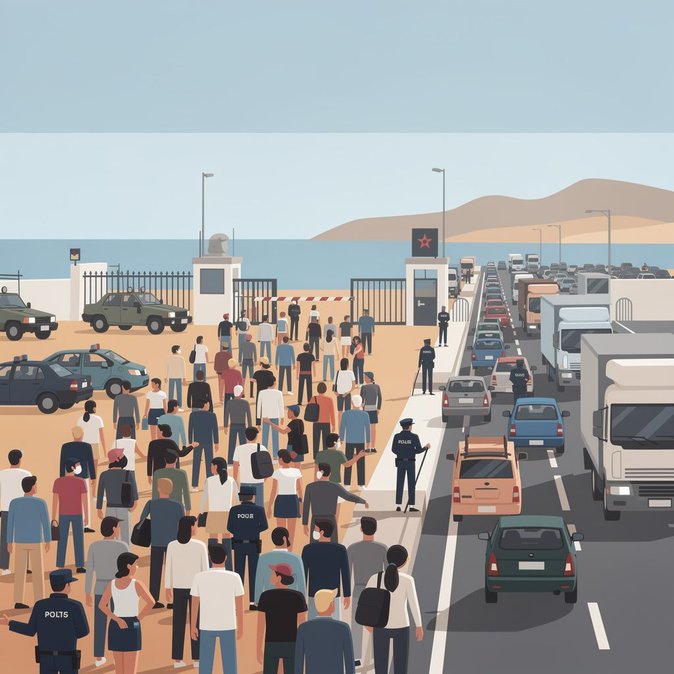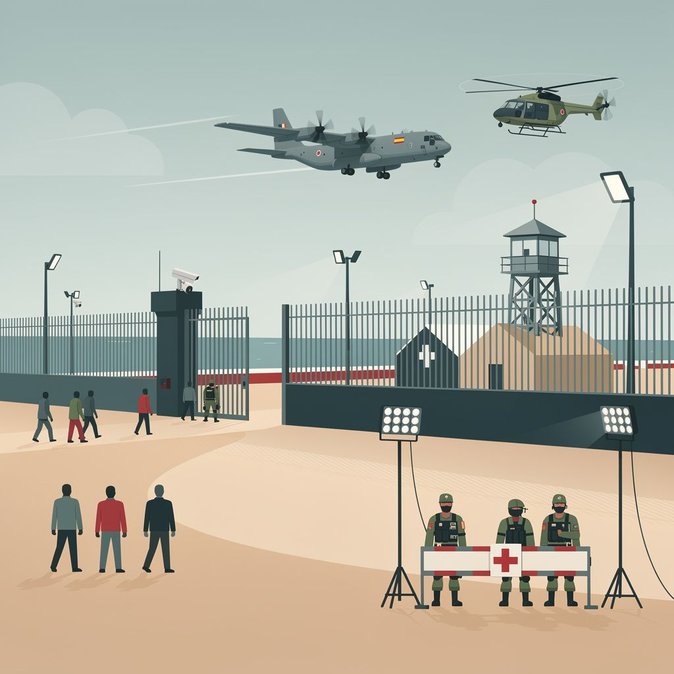
Hours after the mass entry of migrants into Ceuta, the Spanish government authorised the deployment of Army units to back up the Guardia Civil on the city’s 8-kilometre land perimeter. A Defence Ministry communiqué issued at 08:00 on 30 July confirmed that troops from the La Legión brigade in Almería and a combat-engineer company from Seville would arrive by sea and airlift during the day, bringing armoured vehicles, thermal-imaging drones and field medical teams. The decision followed an extraordinary meeting of the National Security Council convened by Prime Minister Isabel Rodríguez in La Moncloa. While regional and opposition leaders demanded a declaration of “national emergency,” the cabinet ruled that existing civil-protection legislation did not cover migration flows. Instead, the Interior and Defence ministries activated “Support Plan Ceuta 2026,” a contingency blueprint drafted after the 2021 crisis but never before used. Government spokesperson Pilar Alegría stressed that the army’s mission is limited to logistics, surveillance and humanitarian assistance: “Spanish borders are policed by the Guardia Civil; the Armed Forces will simply provide the capacity needed to stabilise the situation quickly and humanely.” Nonetheless, human-rights groups expressed concern, warning that military involvement risks conflating migration with security threats. For global-mobility stakeholders, the reinforcement could produce both benefits and bottlenecks. Additional personnel may speed up biometric registration under the Schengen Entry/Exit System, restoring orderly crossings for Moroccan expatriates using Ceuta as a gateway to mainland Spain. However, temporary roadblocks, ID filtering and curfews inside the enclave could delay supply chains and commuter traffic. Multinational firms with staff stationed in Gibraltar, Málaga or Tangier are advised to monitor advisories from Spain’s Interior Ministry and schedule critical movements outside peak hours.
Source: El País