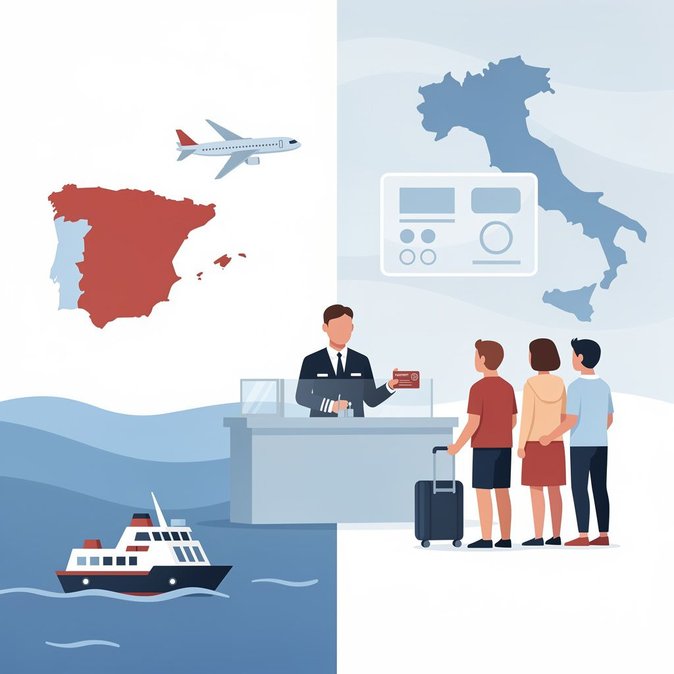
In a rare move between two Schengen partners, the Italian Interior Ministry announced on 31 July that it is temporarily re-establishing controls at its air and sea borders for passengers arriving from Spain. The measure, effective at midnight, responds to what Rome calls “a sudden and extraordinary migration pressure on the EU’s south-western flank.” Although early drafts suggested all travellers would be screened, Deputy Prime Minister Matteo Salvini later clarified that only non-EU citizens will face systematic ID and visa checks. Airlines operating Spain–Italy routes – including Iberia, Vueling, Ryanair and ITA Airways – must now transmit Advance Passenger Information (API) to Italian police before departure and prepare for spot checks on arrival. Ferry operators Grimaldi Lines and GNV, which link Barcelona and Valencia with Genoa and Civitavecchia, have been instructed to deny boarding to third-country nationals lacking proof of legal stay in the Schengen area. The enforcement is authorised under Articles 25-28 of the Schengen Borders Code, which allow a member state to restore internal border controls for up to 30 days in the event of a serious threat to public policy. For business travellers, the immediate impact is longer dwell times at ports and airports – carriers are advising passengers to arrive at least two hours before short-haul departures – and the need to carry documentation proving the right to move within Schengen (residence card, EU mobile workers document or multiple-entry visa). Corporate mobility managers should update travel-approval workflows to flag itineraries touching Italy and Spain, and verify that posted-worker notifications account for potential layovers in Italian territory. The diplomatic ripple effects are significant. Spain’s Foreign Minister José Manuel Albares expressed “surprise” at Italy’s unilateral action and called for an extraordinary Justice and Home Affairs Council meeting. Brussels has so far taken note but reminded member states that controls must be “proportionate and time-limited.” If other countries follow Italy’s lead – Finland and Sweden have hinted at similar steps – Schengen-wide business travel this summer could slow markedly.
Source: El País / Cadena SER