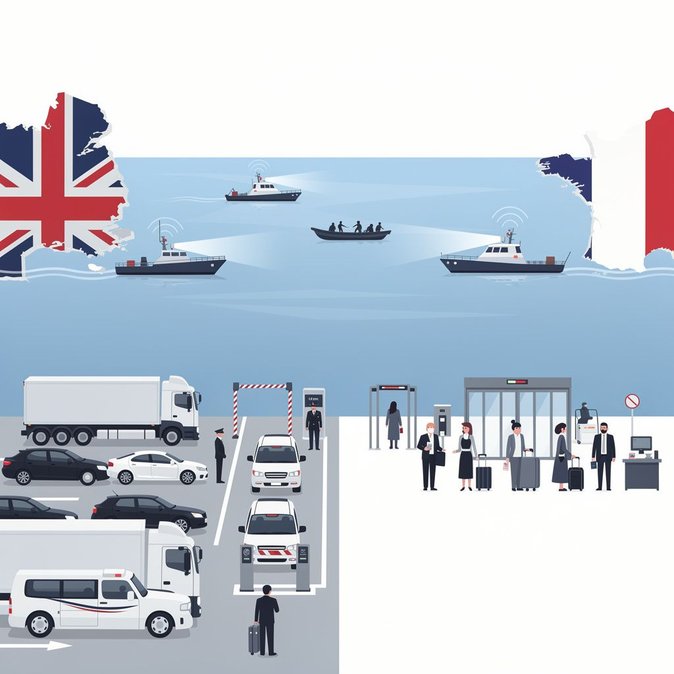
The Home Office has warned the French government that it is prepared to freeze up to £160 million in bilateral border-security payments unless French police dramatically reduce the number of small boats leaving beaches around Calais, according to a report first published on 31 July 2026. The money is part of a multi-year Franco-British agreement signed in early 2025 that funds additional gendarmes, patrol vehicles, coastal surveillance drones and new reception facilities on the French side of the Channel. Senior Home Office sources told *i* newspaper that ministers are frustrated the number of crossings has risen for the fourth consecutive month, reaching more than 15,800 people so far this year despite the extra funding. Under the memorandum of understanding, annual tranches of British support are contingent on a “demonstrable and sustained reduction” in departures; officials now argue that the metric has not been met. A formal performance review clause allows the UK to defer or cancel a payment if agreed operational targets are missed for two consecutive quarters. The warning marks the toughest line a British government has taken with Paris since cooperation on Channel migration was stepped up in 2021. Home Secretary Sarah Jones is said to believe that withholding funds would concentrate minds in the Élysée Palace ahead of France’s 2027 presidential election, when migration is expected to dominate the domestic agenda. French interior-ministry officials quoted anonymously by French broadcaster BFM TV called the move “counter-productive brinkmanship” and insisted that arrests, boat seizures and beach interceptions are all running at record highs. Behind the scenes, UK Border Force commanders argue that the real problem lies with increasingly sophisticated smuggling gangs who switch launch sites rapidly and use larger, more powerful RIBs capable of clearing French waters in minutes. They also note that weather windows in 2026 have so far been unusually calm, giving smugglers more opportunities. Nevertheless, British ministers face mounting political pressure after a series of high-profile Channel deaths and the spiralling cost of hotel accommodation for asylum seekers, now running at about £11 billion a year. For employers who rely on overseas talent—and for mobility managers moving staff between continental Europe and the UK—the dispute matters because it could trigger fresh disruption at Dover and Folkestone if relations sour further. In 2022 a similar row led to ad-hoc French port inspections that caused multi-hour freight delays. Global mobility teams are therefore advised to monitor bilateral talks closely, prepare contingency routings via Holland or Belgium for time-critical shipments, and brief assignees about the possibility of spot checks or queues at juxtaposed controls if tensions escalate.