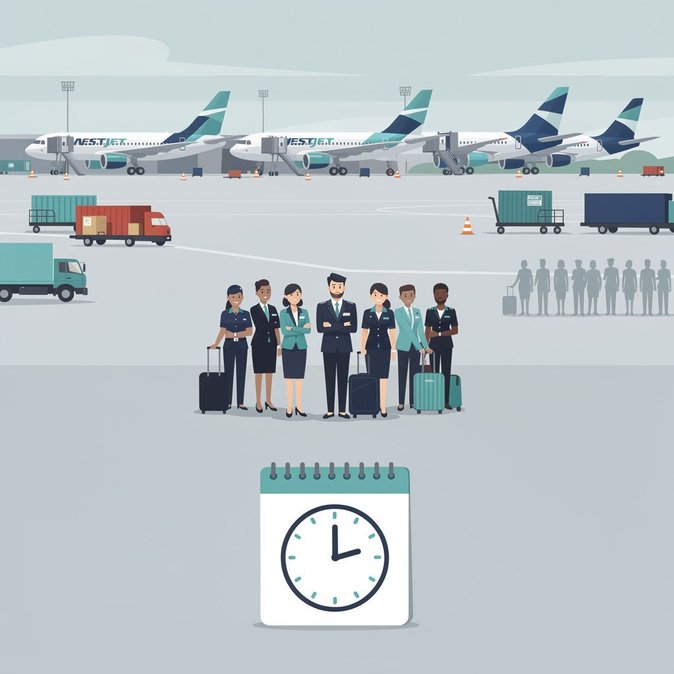
WestJet’s 4,400 cabin crew members have formally served the Calgary-based carrier with a 72-hour strike notice, putting tens of thousands of itineraries at risk during one of the busiest travel periods of the Canadian summer. The notice, delivered late on 30 July, means the work stoppage could legally begin at 00:01 a.m. EDT on Monday, 3 August—exactly when many Canadians will be trying to get home from the country’s August long-weekend holiday. The Canadian Union of Public Employees (CUPE), which represents the flight attendants, says the dispute centres on ground-duty pay. Crew are currently compensated under a credit-hour system that starts only when the aircraft doors close; CUPE argues that tasks such as boarding and on-ramp safety checks amount to unpaid labour worth up to 35 minutes per flight. WestJet counters that overall wage packages already price in pre-departure duties, but has indicated it is willing to “modernise” pay scales if productivity offsets are found. While negotiations are continuing under federal mediation, corporate travel managers are already activating contingency plans. WestJet controls roughly one-third of domestic seat capacity and operates key trans-border shuttles to U.S. hubs such as Los Angeles and Chicago, making it a linchpin for executives shuttling between Western Canada’s energy corridor and the United States. John Gradek, an aviation lecturer at McGill University, estimates that a full strike would disrupt about 600 flights and 75,000 passengers every day. Under Canada’s Air Passenger Protection Regulations, the airline would be obliged to re-route travellers within 48 hours or provide refunds—a requirement that could cost the carrier millions if other airlines are sold out. For multinational employers the timing could hardly be worse. Oil-patch shutdowns at summer’s end and early-August mining conferences typically trigger a spike in charter traffic to Alberta and the North. “Even a two-day walk-out would ripple into late-week schedules because crews and aircraft will be out of position,” warns Margaret Reid, travel manager for a Calgary engineering firm. Companies with critical movements next week are being urged to ticket on Air Canada or purchase fully refundable fares that can be re-accommodated quickly. Under the Canada Labour Code the federal government has the authority to order binding arbitration if public interests are at stake, but Transport Minister François-Philippe Champagne has so far limited his involvement to “strong encouragement” for a negotiated deal. Observers note that Ottawa intervened in last summer’s three-day Air Canada cabin-crew strike only after operations had ground to a near halt. If history is any guide, both sides have roughly 48 hours to hammer out a compromise before political pressure intensifies. Either way, global mobility teams should be monitoring developments closely and updating employee travel alerts through the weekend.
Source: Associated Press