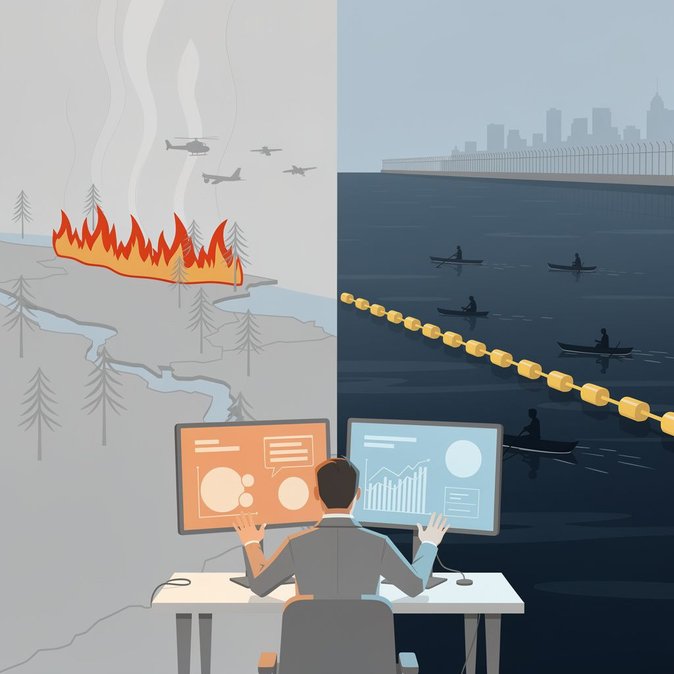
A profile in El País on 2 August recounts how Interior Minister Fernando Grande-Marlaska spent three days shuttling between wildfire command centres in Galicia and crisis rooms in Ceuta, illustrating the stretched bandwidth of Spain’s security apparatus. The piece reveals that Spanish intelligence had warned of possible “pressure migration” but underestimated scale and timing. Marlaska authorised the buoy barrier after legal advisers confirmed that the Supreme Court decision on hot-returns could be addressed by adding a marine “element of contention.” Simultaneously, he coordinated with regional governments to redeploy fire-fighting aircraft away from the northwest once rain eased, freeing up military helicopters for coastal patrols. The narrative underscores the convergence of climate-driven disasters and migration management—two issues that increasingly demand the same human and material resources. For businesses, it suggests that emergency services may be redeployed rapidly in future, potentially affecting disaster-response agreements and insurance claims. It also highlights the importance of multi-hazard continuity planning: companies relocating staff within Spain must account for the possibility that a natural-hazard response could suddenly compete with border-security needs, straining transport, accommodation and medical support.
Source: El País