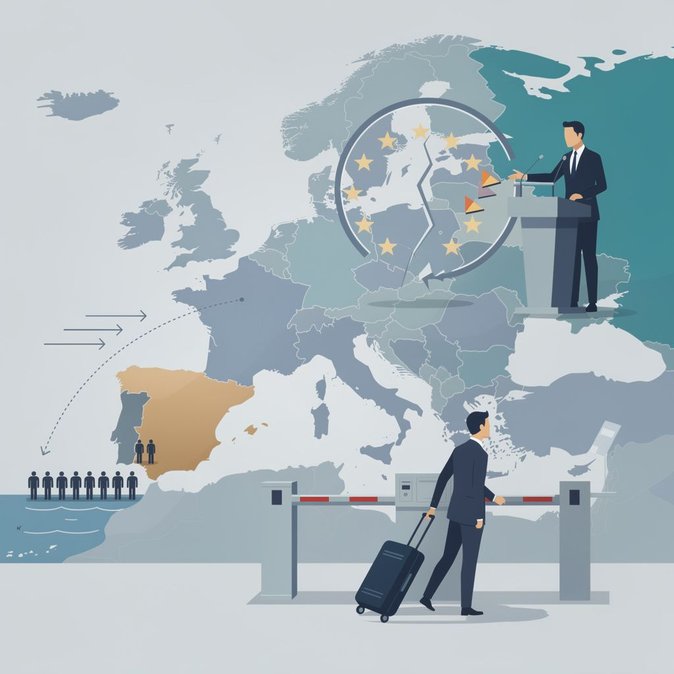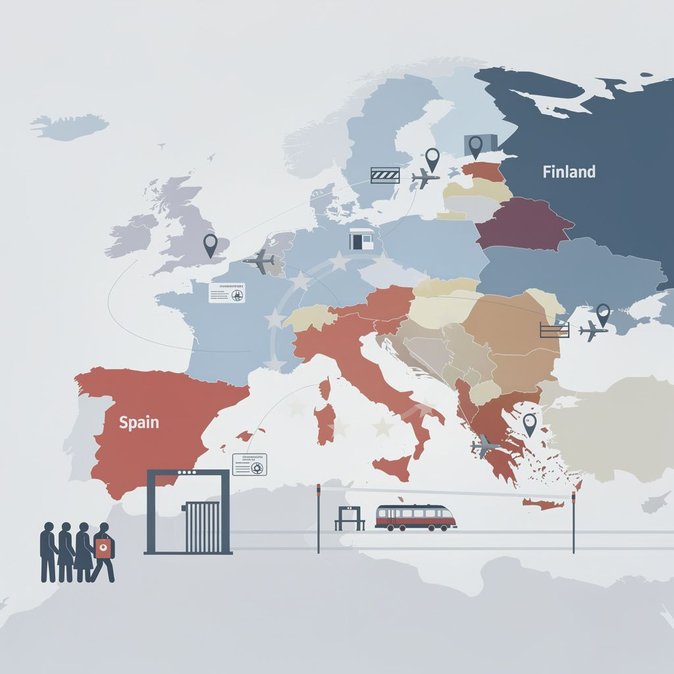
Spain’s North-African enclave of Ceuta saw an unprecedented influx of an estimated 60,000 irregular migrants crossing from Morocco this week. Within hours, Italian Prime Minister Giorgia Meloni urged her EU partners to invoke an emergency suspension of Spain’s participation in the passport-free Schengen Area. Although Italy has no land border with Spain, Rome said the step was needed to protect the Union’s external frontier and announced spot checks on passengers arriving from Spanish airports and ports. In Helsinki, Interior Minister Mari Rantanen was the first EU counterpart to echo Meloni’s demand. Speaking to reporters on Friday morning, Rantanen said that “the integrity of Schengen depends on every member fulfilling its border-management obligations; if one state fails, temporary suspension must be on the table.” Denmark’s government later issued a similar statement, leaving Finland, Denmark and Italy as the only capitals openly backing the idea. Legal experts—including former EU foreign-policy chief Josep Borrell—were quick to point out that no member state can unilaterally expel another from Schengen. Any formal suspension would require a unanimous Council decision under Article 29 of the Schengen Borders Code, a mechanism that has never been used. The European Commission reiterated this in a lunchtime press briefing and instead urged enhanced Frontex support for Spanish authorities. Commission President Ursula von der Leyen told X (formerly Twitter) that “dangerous crossings must stop, but solidarity and EU law must prevail.” For Finnish businesses, Rantanen’s tough line reflects growing domestic pressure to curb secondary movements of asylum-seekers entering via Spain—Finland received just over 2,300 irregular arrivals in 2025, but political debate has intensified since the border with Russia was sealed in late 2023. Airlines and logistics operators, however, fear that any suspension would disrupt the peak holiday season, forcing extra ID checks on EU nationals in Helsinki, Málaga and elsewhere, and complicating cargo trans-shipments routed through Spain’s ports. Even without a Schengen suspension, Finland could introduce prolonged controls on passengers arriving from Spain, as France and Germany have done on other routes since 2015. Employers sending staff to Spain are therefore advised to budget additional travel time and carry proof of intra-EU posting. Immigration counsel also warn that a formal Schengen suspension—however unlikely—would automatically void the 90-day visa-free rule between Finland and Spain, requiring work-travelers to apply for national visas instead. Multinational firms with Nordic headquarters are closely monitoring today’s extraordinary Justice and Home Affairs Council, where Spain will brief ministers and Finland will press for an EU-wide contingency plan.
Source: Cadena SER