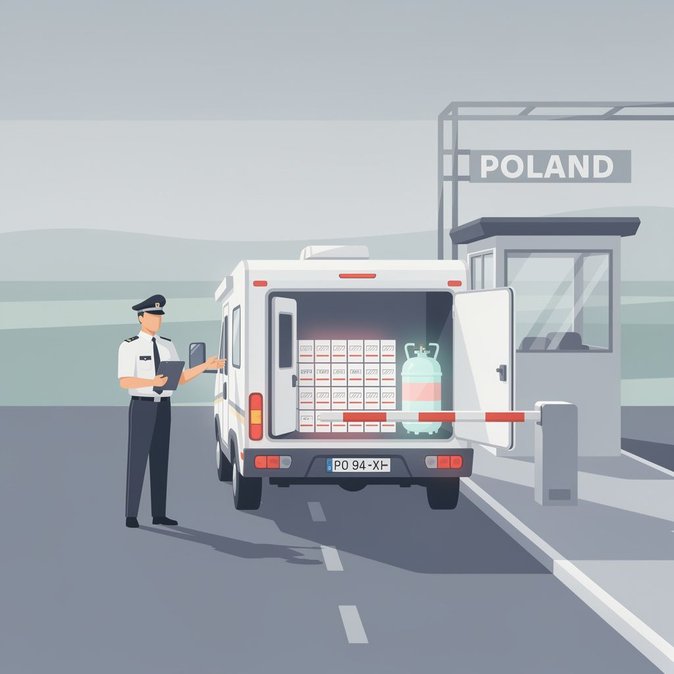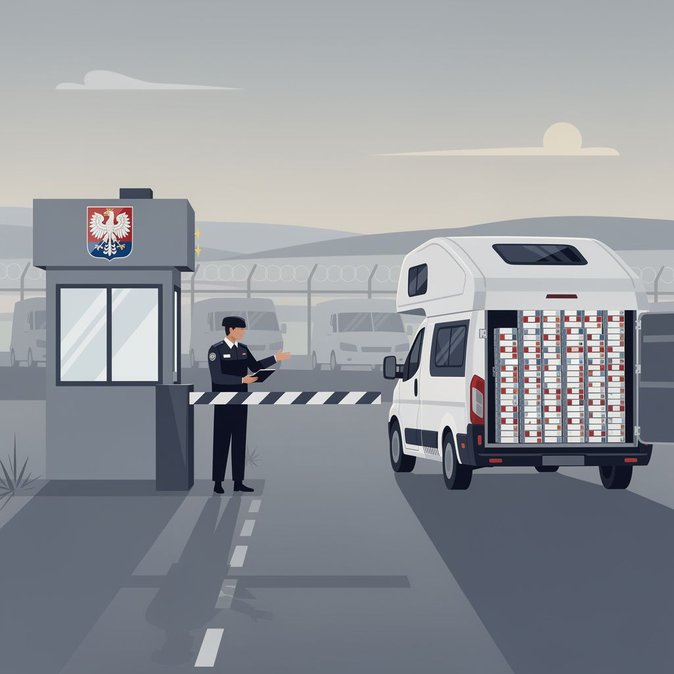
Polish border authorities at the Hermanowice facility (south-eastern Podkarpackie region) uncovered more than 2,000 packs of untaxed cigarettes hidden inside a motor-home, the Straż Graniczna confirmed on 3 August 2026. The driver—a Polish citizen returning from Ukraine—aroused suspicion when officers noticed fresh welding marks around internal panels. Working with the National Revenue Administration (KAS) and a tobacco-detection dog team, guards dismantled false compartments to reveal branded cigarettes without Polish excise stamps, valued at roughly PLN 44,000 (EUR 9,800). A refrigerant canister requiring a transport permit was also seized. Follow-up searches at the suspect’s residence yielded another 300 packs, suggesting the individual was part of a small-scale smuggling network that exploits recreational vehicles to camouflage illicit loads. Poland’s eastern land border—while primarily associated with irregular migration—has seen a growing trend of excise-goods fraud as organised groups diversify revenue streams. For companies operating corporate motor-homes, media fleets or employee shuttles, the incident illustrates the high level of scrutiny customs officials now apply to special-purpose vehicles. Delays for full disassembly inspections can exceed several hours, so mobility planners should build extra time into itineraries and verify that staff carry clean cargo manifests. Strategically, Polish authorities are stepping up joint patrols with customs to plug fiscal leakages that cost the treasury an estimated PLN 6 billion annually. More X-ray scanners and canine units are being deployed at Podkarpackie crossings ahead of the holiday return rush later in August, and fines for first-time smuggling offences were doubled on 1 July 2026. Businesses should brief travellers accordingly and review corporate compliance policies on carriage of dutiable goods.
Source: Straż Graniczna