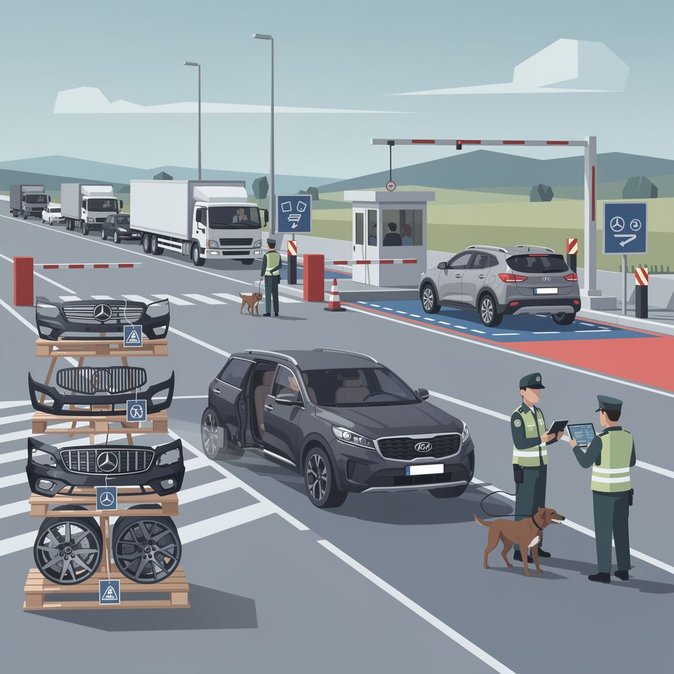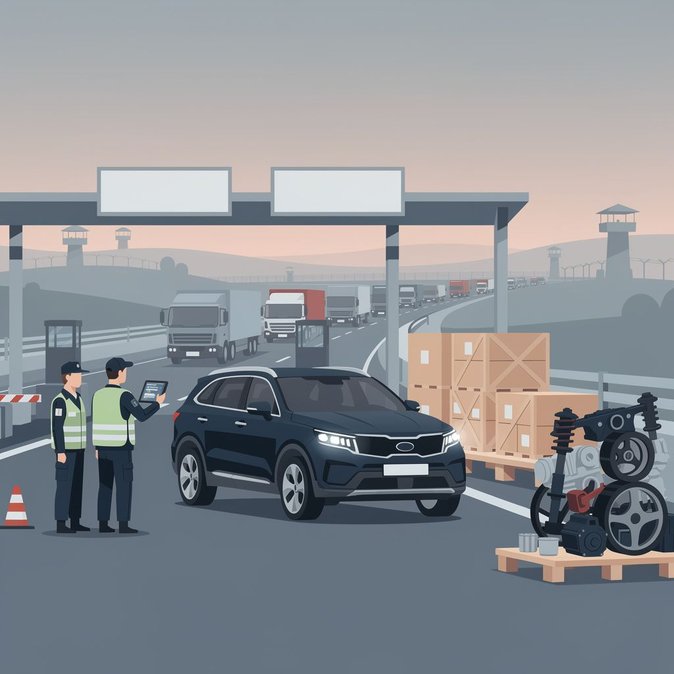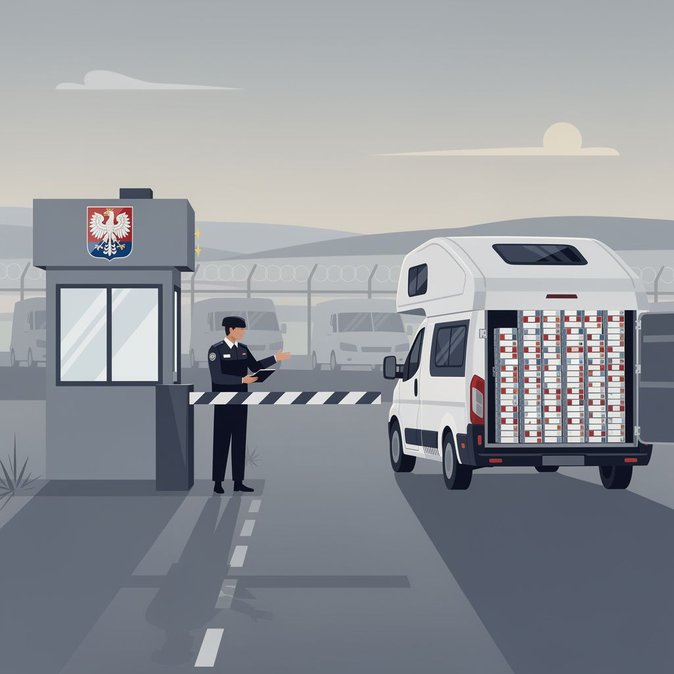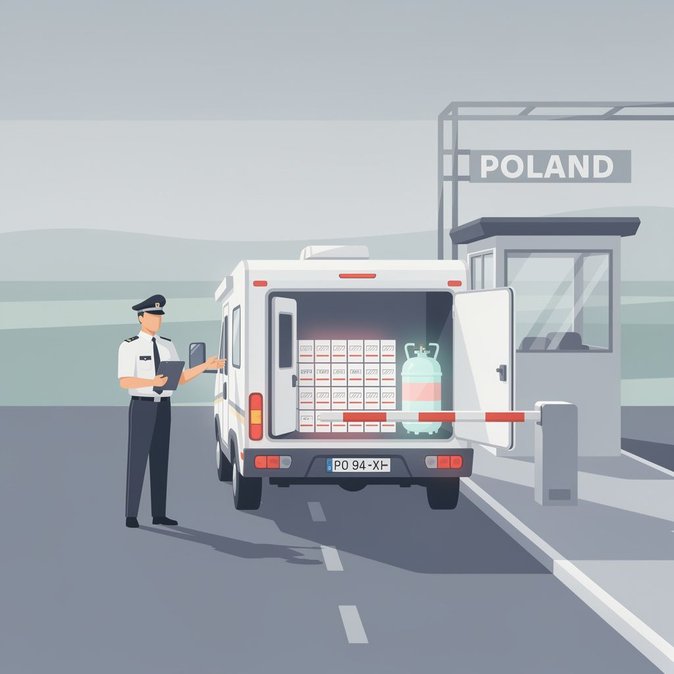
In a separate 3 August communiqué, the Border Guard detailed how officers from the Hermanowice post—working with customs and sniffer-dog teams—found 2,000 packets of untaxed cigarettes hidden in purpose-built compartments of a Polish-registered motorhome entering at Malhowice on 28 July. The driver, a Polish citizen returning from Ukraine, also carried an undeclared gas cylinder containing refrigerant, a controlled substance that requires a transport licence. Follow-up searches at the suspect’s residence yielded another 300 packets, bringing the total domestic tax loss to roughly PLN 44,000 (€ 9,900). Customs (KAS) has opened fiscal-crime proceedings; the Border Guard retained the vehicle and forwarded environmental-breach evidence to prosecutors. The bust illustrates the multi-agency approach Poland now applies on its eastern flank. Since the Russia–Ukraine war redirected freight and private travel southwards, Malhowice—once a quiet local crossing—has become a test-bed for joint Border Guard/Customs patrols using scanning vans, carbon-dioxide sensors and canine units. For mobility and supply-chain professionals the practical impact is twofold. First, personal or corporate vehicles may be subject to intensive physical searches, so logistics providers should factor extra time into door-to-door schedules. Second, companies sending technicians in refrigerated-goods sectors must ensure ADR and fluorinated-gas transport paperwork is in order; failure to do so can now trigger both customs penalties and environmental fines. Longer-term, Poland wants to digitise excise-duty tracking via the EU’s forthcoming EMCS 4.0 platform. Until then, classic concealment methods—from camper shells to truck cavities—will remain high on inspectors’ watchlists.
Source: Straż Graniczna – Komenda Główna