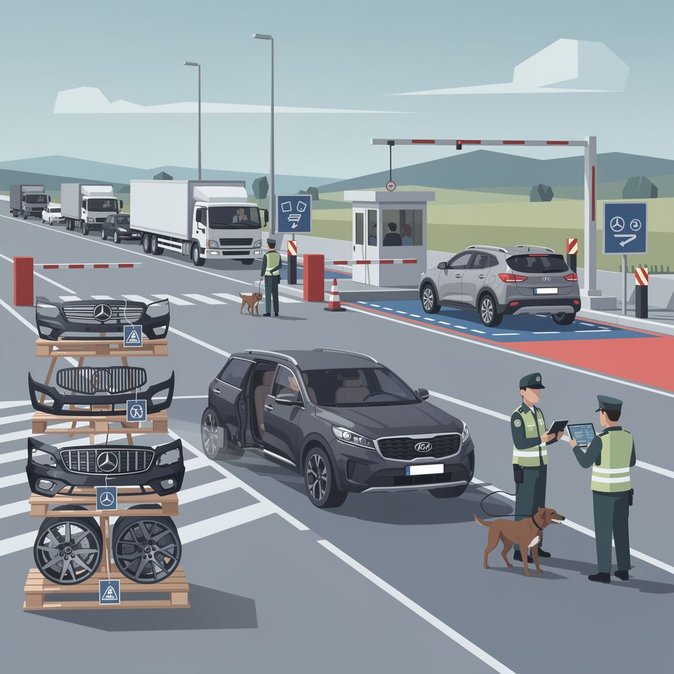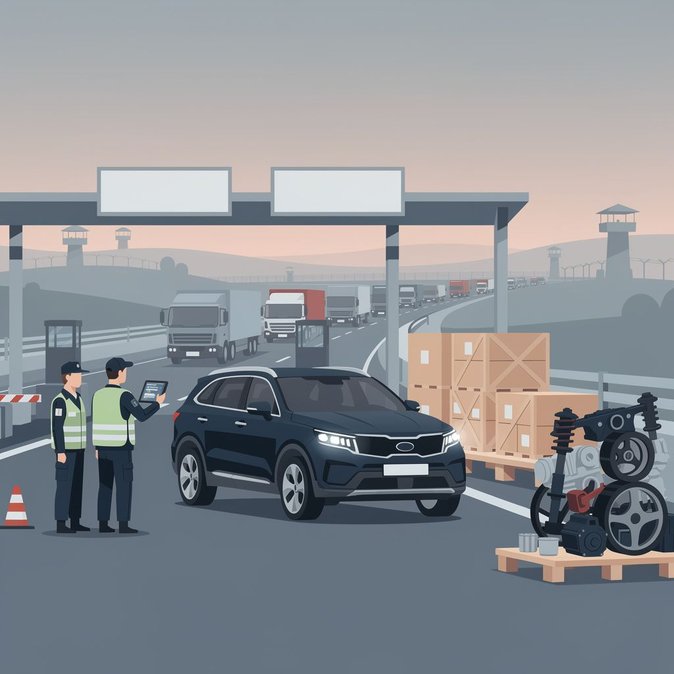
Poland’s Border Guard (Straż Graniczna) reported a string of successful anti-theft operations at the Budomierz and Korczowa road crossings on 1-30 July, releasing full details on 3 August. Officers stopped a 61-year-old Ukrainian driver in a Kia Sorento and discovered the car’s VIN had been tampered with; checks of EU and Interpol databases revealed the SUV had been stolen in Germany in March. The vehicle – worth an estimated PLN 90,000 (€ 20,000) – was seized and the driver questioned as a witness. Later the same night, Korczowa officers prevented two Ukrainian nationals from taking Mercedes-Benz body panels worth PLN 14,000 across the frontier. One part originated from a car stolen in Poland, the other from a vehicle taken in Italy. Both suspects were detained for further proceedings. The operation highlights how Poland has tightened land-border checks since 2025—particularly on routes linking Germany, Poland and Ukraine—under a succession of six-month “temporary re-introductions” of Schengen controls. While the measures are primarily aimed at curbing irregular migration, they also give officers greater latitude to inspect cargoes and private vehicles, turning crossing points into chokepoints for organised car-theft rings that target Western Europe and funnel parts eastwards. For corporate mobility managers the message is two-fold. First, expect longer dwell times for trucks, private cars and buses on the A4/E40 and DK-867 corridors as documentation and VIN numbers are scrutinised. Second, executives moving vehicles on Carnet de Passages or leasing fleets into Poland should ensure that ownership documents and GPS tracking records are impeccable; cars listed in any loss register can be impounded immediately. In the medium term, Poland plans to connect its frontline posts directly to the EU’s Entry/Exit System (EES) equipment it rolled out in April, allowing automatic plate scans against Schengen-wide hotlists. That will further professionalise controls but is unlikely to shorten queues until staffing catches up with workload.
Source: Straż Graniczna – Komenda Główna