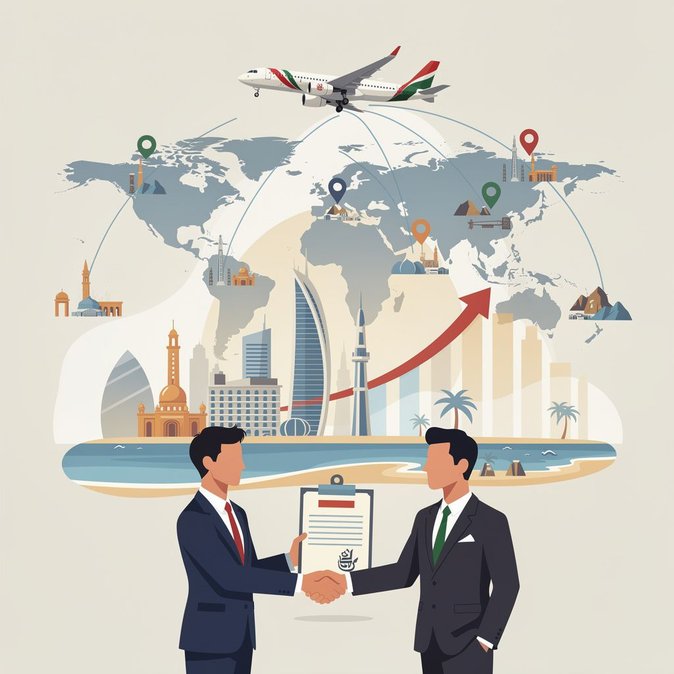
Dubai’s flagship carrier used the opening morning of Arabian Travel Market (ATM) 2026 to turbo-charge its destination-marketing machine. At a ceremony on 14 September, Emirates signed seven separate Memoranda of Understanding with tourism authorities covering the Seychelles, Mauritius, Madagascar, Malaysia, Finland, Fjord Norway and the Sharjah Commerce & Tourism Development Authority. The agreements commit the airline and its partners to joint advertising, familiarisation trips and data-sharing designed to push visitor numbers to—and through—Dubai while helping the partner destinations reach new source markets. Although Emirates has long cooperated with individual tourism boards, sealing seven deals in one morning underlines the scale of the recovery in global air travel and the carrier’s determination to convert that rebound into transfer traffic over Dubai International Airport. The airline highlighted that it now serves almost 140 destinations and is preparing to launch daily Helsinki flights on 1 October—just one of the route announcements bundled into the MoUs. For the UAE, the accords strengthen Dubai’s role as a connective hub and support the wider national target of attracting 40 million hotel guests a year by 2031. Industry observers note the ripple effects for corporate mobility. Joint destination campaigns typically mean more seat capacity, discounted through-fares and simplified group-travel logistics—critical for multinational companies that rotate staff between project sites in Africa, Europe and Asia. The fresh marketing spend should also help secondary UAE cities such as Sharjah capture stop-over traffic, easing pressure on Dubai while spreading tourism receipts across the federation. Emirates also renewed commercial partnerships with Huawei and Dubai Duty Free during the show. Both tie-ups focus on passenger experience: the Huawei deal extends the airline’s digital-wallet integration in China, while the Dubai Duty Free agreement gives Emirates’ passengers airport-exclusive retail offers. Together they show how travel, tech and retail are converging to create “stickier” itineraries that keep visitors—and their spending—inside the UAE’s ecosystem. From a practical standpoint, global mobility managers should watch for tactical fare sales and trade-familiarisation tours that typically follow such MoUs. Employees travelling on short notice to the newly promoted destinations may soon find greater flight frequency, better connection times and promotional fares routed through Dubai, reinforcing the emirate’s attractiveness as a regional assignment base.
Source: Emirates Newsroom