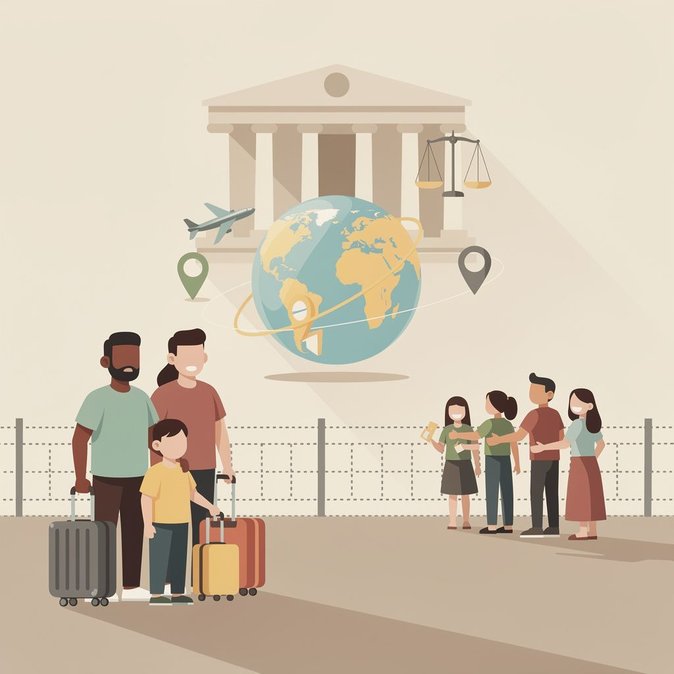
In an order published late on 14 September 2026, Supreme Court Justice Edson Fachin agreed to fast-track deliberations in Extraordinary Appeal 1579212, a case that could permanently change how Brazil treats visa requirements when immediate family members of foreign residents face a humanitarian crisis at home. The matter involves a Haitian national living legally in Santa Catarina whose wife and minor daughter were unable to obtain visas at the Brazilian embassy in Port-au-Prince because the post has operated intermittently since the 2021 earthquake. The claimant argues that the family should be allowed to enter without visas, citing both Article 4 of the Migration Law (Lei 13.445/2017) and multiple precedents in which the Court has waived formal entry requirements for vulnerable minors. Justice Fachin’s despacho stresses the “urgent humanitarian dimension” of the case and instructs the Attorney-General and Ministry of Foreign Affairs to submit updated statistics on consular backlogs in Haiti within ten days. Observers note that the Court’s two chambers have already ruled in favor of ad hoc visa exemptions for unaccompanied Haitian minors, and a favorable plenary decision would extend that protection to adult family members. Human-rights organizations, including Conectas and Caritas, have petitioned to participate as amici curiae, arguing that Brazil’s constitutional commitment to family unity should override rigid documentary rules when foreign missions cannot function. For multinational companies the stakes are significant. Brazil has become a hub for intra-Latam assignments, and many employees bring spouses and children from countries with fragile institutions. A clear doctrine allowing entry on humanitarian grounds would give corporate mobility managers a predictable defence when dependants are stranded by sudden consular closures — whether in Haiti, Venezuela or elsewhere. Conversely, if the Court rejects the appeal, companies may need to budget for emergency travel to third-country consulates or absorb lengthy project delays. Practically, immigration advisers recommend that assignees from crisis-prone jurisdictions file advance humanitarian parole requests with the Ministério da Justiça as soon as family-reunification needs arise. They also urge employers to document any mission-critical impact so that, should the Supreme Court endorse waivers, they can swiftly attach evidence to new border-entry petitions. A final ruling is expected before the end of the current judicial term in November 2026.