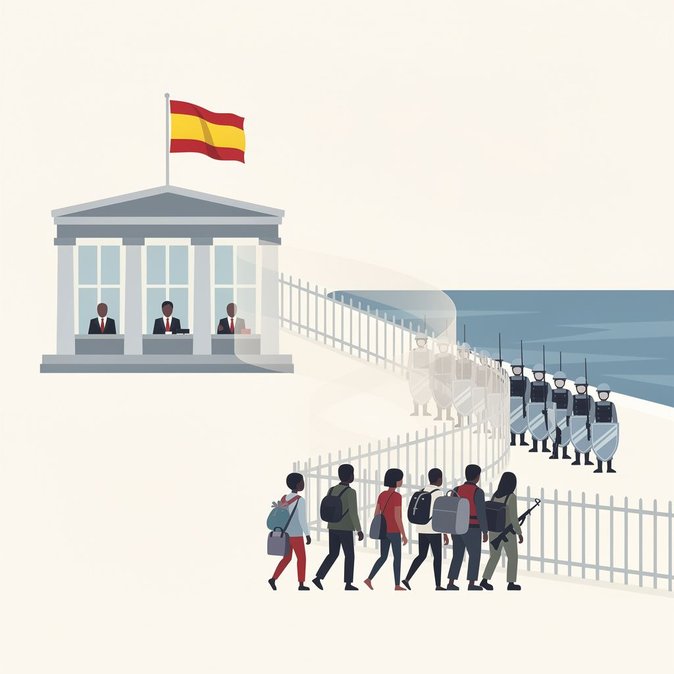
Interior Minister Fernando Grande-Marlaska told reporters on Monday night that the emergency reception system in Ceuta has “reached cruising speed,” processing biometric enrolment and initial asylum screening for more than 55,000 of the estimated 70,000 migrants who crossed the frontier on 30 – 31 July. Speaking after visiting the new Rosales accommodation site, the minister said 864 people spent their first night there on 14 September, freeing space in makeshift beach camps. The National Health Institute (INGESA) has kept a special medical deployment in place, treating 291 migrants for dehydration and minor injuries since Friday. With the immediate humanitarian phase stabilising, the government is shifting resources to voluntary-return counselling and relocation to mainland reception centres. According to official figures, 5,300 migrants have already opted to return to Morocco, a sign that bilateral talks with Rabat are beginning to bear fruit. From a mobility perspective, the crisis continues to affect both goods and passenger flows through the Algeciras-Ceuta ferry corridor, where security checks add up to 40 minutes to boarding. Logistics firms moving time-critical auto components from Tangier Med to Spanish assembly plants report having to reroute shipments via northern ports or air-freight. Employers with staff on temporary assignment in the enclave should note that visitor permits for non-residents are now capped at 24 hours unless sponsored by a registered local company. Meanwhile, the foreign ministry has circulated guidance to embassies clarifying that the Ceuta influx does not change Spain’s Schengen visa-issuance policy and that applications should continue to be assessed under standard criteria. The government expects to reduce the on-site migrant population to 15,000 by year-end through a mix of repatriations, asylum processing and transfers to mainland shelters. However, analysts caution that any resurgence of crossings could strain the system again and prolong the ripple effects on border travel between Spain and Morocco.
Source: Cadena SER / RTVE