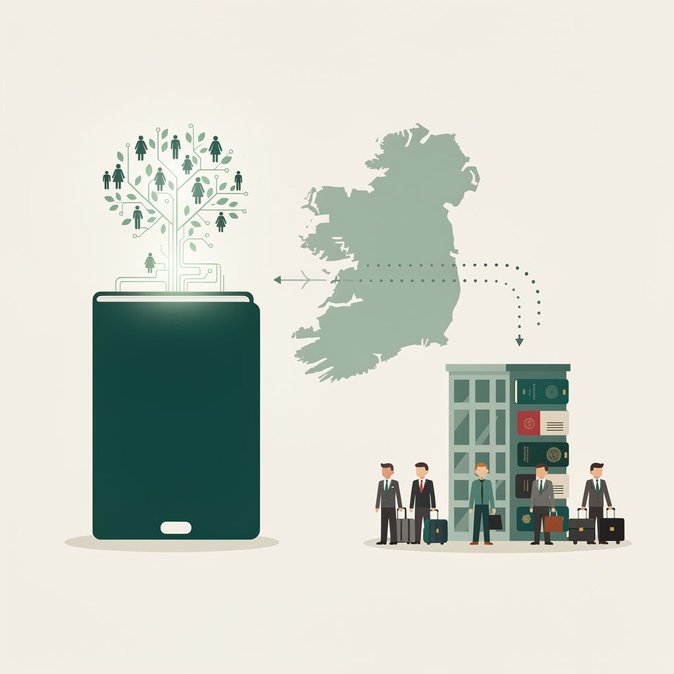
A column by Irish Times commentator Fintan O’Toole on 15 September 2026 has reignited debate about Ireland’s dual-track citizenship regime. Citing Department of Foreign Affairs data, O’Toole notes that 54,097 people applied for Irish citizenship via the Foreign Births Register in 2025—more than twice the 25,000 residents who were naturalised by the Department of Justice in the same year. The Foreign Births Register grants citizenship to anyone with an Irish-born grandparent (or a parent already on the register) regardless of residence or future ties to the State. Applications, particularly from the United States, jumped 63 per cent last year after the online release of the 1926 Census made ancestry tracing easier. By contrast, the Government now proposes to make naturalisation for on-shore migrants more onerous, drawing criticism of an “implicit two-tier system”. Diaspora groups welcome the surge, arguing that additional passport-holders bolster Ireland’s global influence and soft power. Yet business-immigration lawyers warn of reputational risks: while Ireland courts investors and healthcare workers, it appears to elevate genetic links over economic contribution—an optics problem at a time of global competition for talent. Practical ramifications include a likely backlog at Irish diplomatic missions; some US consulates already report six-month appointment waits. Companies that rely on employee passport renewals for U.S. assignments should monitor processing times, as consular resources are finite. Policy analysts suggest aligning the two pathways by introducing modest residency or cultural-familiarity requirements for ancestry applicants or, conversely, by maintaining the five-year rule for residents. With naturalisation reform headed for the Oireachtas, legislators now face pressure to reconcile the divergent channels.
Source: The Irish Times