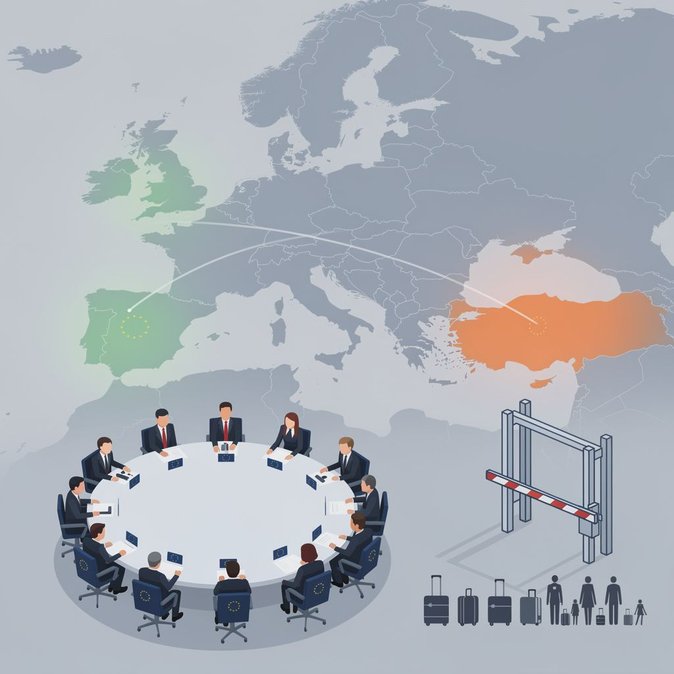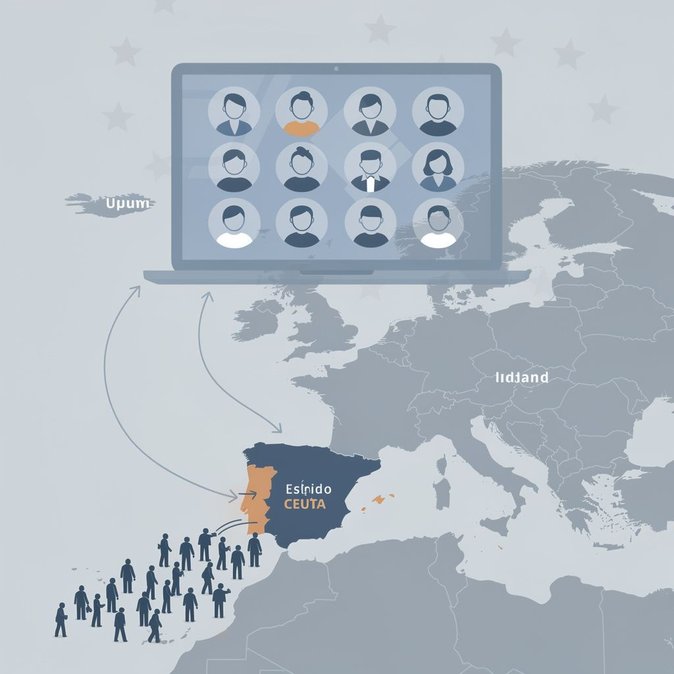
With the ink barely dry on Ireland’s assumption of the rotating Presidency of the Council of the European Union on 1 July, Dublin has been thrust into an early test of its crisis-management credentials. Early this morning (4 August 2026) the Department of Justice confirmed that Minister for Justice, Home Affairs and Migration Helen McEntee will chair an extraordinary videoconference of the bloc’s 27 interior ministers. The virtual meeting was called at Ireland’s initiative after an estimated 50,000 people crossed from Morocco into the Spanish enclave of Ceuta on 30 July in what Madrid has described as “the largest mass entry attempt in modern EU history.” Ireland’s objective is two-fold. First, to signal solidarity with Spain—a message Taoiseach Micheál Martin conveyed in calls to Spanish Prime Minister Pedro Sánchez over the weekend—and, second, to keep the fragile 2024 Pact on Migration and Asylum on track. Although most of the Ceuta entrants returned to Morocco within 24 hours, the political fallout has been severe. Nineteen member states have already demanded stricter internal Schengen controls, while twenty-two leaders from the centre-right signed a letter accusing Spain of creating “pull factors.” Ireland, bound by the neutrality attached to the Presidency, withheld its signature but must now navigate an increasingly polarised Council. For Ireland’s own mobility stakeholders the stakes are high. Any resurgence of internal border checks—particularly along the Belgian, French and Dutch corridors used heavily by Irish haulage and business travellers—could revive paperwork and queue times that were only recently resolved after Brexit-related disruptions. Aviation interests are just as concerned: Dublin Airport handles more than 13 million Schengen-bound passengers annually, many of whom rely on seamless connections in Spain and France. Sources in the Department of Enterprise, Trade and Employment told Global Mobility Daily that officials are preparing contingency guidance for employers whose assignees transit Spain, including advice on carrying additional proof of status and allowing longer connection windows. Irish multinationals with operations on the Iberian Peninsula—ranging from CRH to Kerry Group—have likewise activated mobility task-forces to monitor potential transport bottlenecks and short-notice visa policy shifts. While few expect today’s videoconference to deliver concrete legislation, observers say Ireland’s stewardship could shape whether hardening attitudes turn into law. “If Dublin can steer ministers toward evidence-based, proportionate measures, it will protect both the integrity of Schengen and the practical interests of Irish travellers,” notes Dr Siobhán O’Leary, Senior Fellow at the Institute of International and European Affairs. The next flash-point will come on Thursday, when the European Parliament’s LIBE committee meets in an extraordinary session to scrutinise the Ceuta events. For now, mobility managers should brace for a summer of policy volatility—one that Ireland, from its new seat at the Council’s helm, must attempt to calm.
Source: Le Monde (English edition)