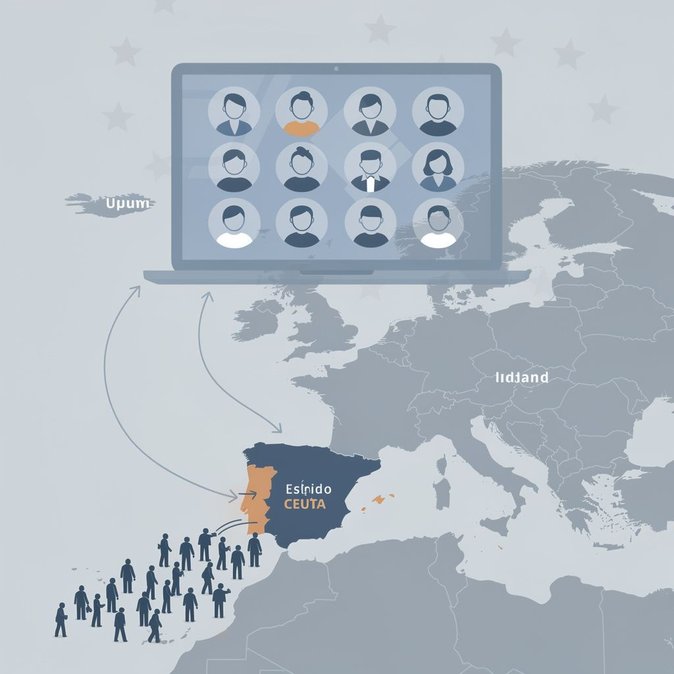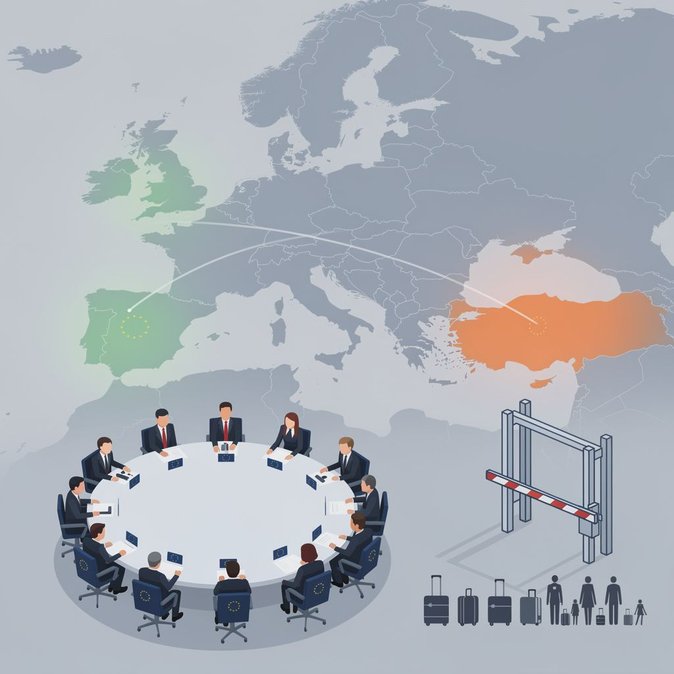
Ireland’s first major crisis as holder of the EU Council Presidency arrived sooner than many in Government Buildings on Merrion Street had hoped. On Saturday, 1 August, Taoiseach Micheál Martin authorised Justice Minister Helen McEntee to convene an emergency videoconference of the 27 interior ministers after some 50,000 people from Morocco entered – and within hours were pushed back from – the Spanish enclave of Ceuta on 30 July. The meeting, which took place this morning (4 August), was chaired from Dublin’s EU Presidency Situation Room and livestreamed to Brussels. Although formally billed as a “lesson-learning exercise”, Irish diplomats acknowledge that the real objective was to demonstrate political solidarity with Spain while tamping down an increasingly fractious blame-game inside the Union. Twenty-two heads of state and government – including Germany, Italy, Poland and Denmark – had written at the weekend accusing Madrid of creating "pull factors" through its April 2026 regularisation scheme for undocumented migrants. Ireland pointedly stayed off that letter, citing the neutrality obligations of the rotating presidency. Behind the scenes, officials say Ireland’s strategy is three-pronged. First, keep the focus on practical cooperation – intelligence sharing with Morocco, rapid-reaction Frontex assets and the use of EU Civil Protection Mechanism funds – rather than on public recriminations. Second, protect the fragile compromise embedded in the 2024 Pact on Migration and Asylum; several governments on the call, notably Rome and Copenhagen, argued for expanding third-country “return centres”, an idea Dublin fears could derail the Pact in the European Parliament. Third, avoid any discussion – for now – of reinstating checks on the Northern Ireland land border, a domestic red line for the coalition government. For Irish multinationals and mobility managers, the immediate impact is indirect but real. Heightened political pressure to tighten Schengen’s internal and external borders invariably spills over into longer queues for EU and non-EU assignees alike, especially at busy hubs such as Dublin, Amsterdam and Frankfurt. In the medium term, corporate mobility teams should watch two files Ireland has put on the Presidency agenda for the October Justice and Home Affairs Council: 1) the long-stalled proposal for an EU Business Mobility Card, modelled on APEC’s scheme, and 2) harmonised minimum service standards for automated e-gates, an area where Dublin Airport is keen to showcase its new biometric corridors. The videoconference ended without formal conclusions but did produce an Irish Presidency “Summary of Points Raised” that will feed into an extraordinary LIBE Committee hearing on Thursday and, ultimately, the 17-18 October European Council. Whether the episode galvanises consensus or deepens divisions will shape the operating environment for business travellers well into 2027.
Source: Le Monde