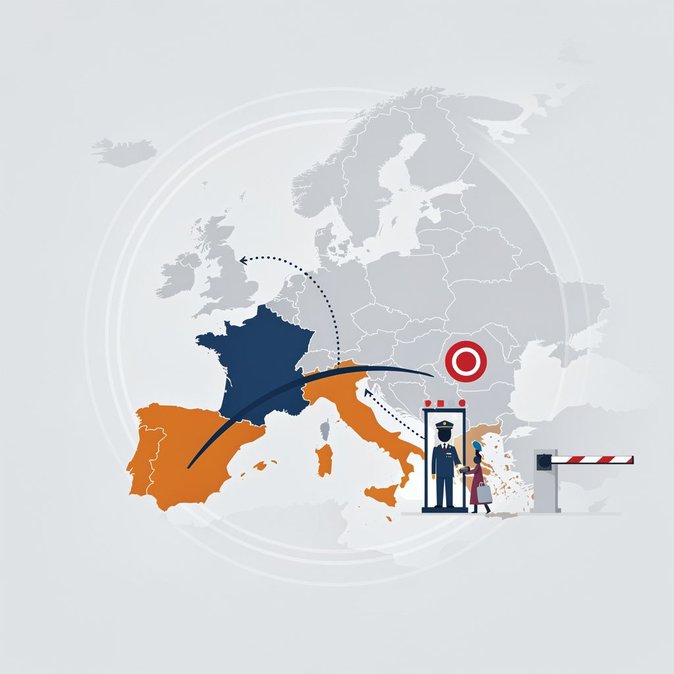
The European Commission’s Schengen dashboard, updated in the early hours of 16 September, now formally lists Italy’s internal border controls with Spain as running from 16 September to 1 October. The notification satisfies the legal requirement that any Schengen suspension be communicated to Brussels and other member states, and it confirms that the extraordinary controls are limited to “all internal air and sea borders with Spain.” The listing provides corporate mobility teams with badly-needed clarity on travel-authorisation validity. Under EU rules, a Schengen visa or residence permit remains valid during temporary borders checks, but travellers must be ready to justify the purpose and duration of their stay. Carriers can be fined for transporting passengers who are refused entry, so most airlines are updating check-in scripts to include advanced document verification for Spain-to-Italy itineraries. From a policy perspective, the Commission’s acceptance of Italy’s justification—continued security risks linked to the Ceuta migrant influx—sets a precedent other member states could follow. Germany and Austria already apply long-running Schengen derogations on their land borders; Spain now faces the prospect of similar checks by third countries if the Ceuta situation worsens. Global employers should therefore conduct a “Schengen readiness audit,” ensuring staff moving between European offices carry employment letters, health insurance and proof of sufficient funds. While the EU does not require visas for EU citizens, third-country nationals on Spanish payrolls could face more rigorous screening when crossing into Italy.