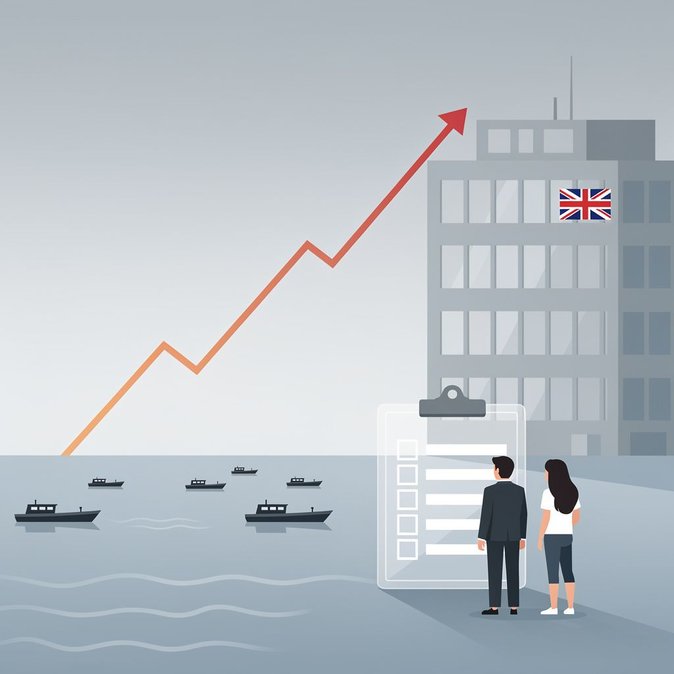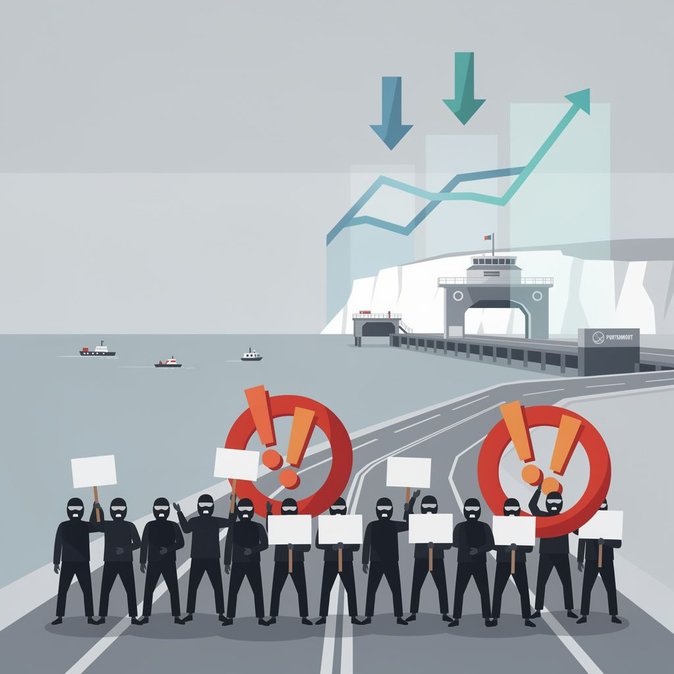
A series of highly choreographed protests by the recently formed group Patriot Platform and other far-right organisations has reignited debate over irregular Channel crossings just as official figures show a sharp fall in overall migration. On 5 September masked activists briefly blocked access roads at the ports of Dover and Portsmouth, chanting “Stop the boats” and attempting to prevent 120 migrants from disembarking. Although police quickly dispersed the demonstrations, video clips circulated widely on social media and were amplified by senior figures in Reform UK and Restore Britain. Prime Minister Andy Burnham condemned the actions as “thuggish intimidation,” while Reform UK deputy leader Lee Anderson praised the protesters. The timing is striking: Home Office statistics for the first eight months of 2026 show a 44 % drop in small-boat arrivals compared with 2025. Net migration overall has almost halved since 2024, following successive Conservative and Labour tightening of family reunification and work-visa rules. Yet polling by the Migration Observatory indicates that 43 % of Britons still cite immigration as a top concern, suggesting perception is diverging from reality. Analysts warn that the optics of small boats will continue to overshadow longer-term labour-market questions—such as looming skills shortages in health and technology—unless government communication improves. For global mobility teams, the episode is a reminder that even modest operational changes (for example, shifting asylum processing out of hotels) can become flashpoints and create reputational risk for employers moving staff into the UK. In the short term, companies with cross-Channel supply chains are unlikely to face direct disruption, but they should monitor port-area security and anticipate possible ad-hoc protests that could delay freight or personnel movements.
Source: Le Monde (English edition)