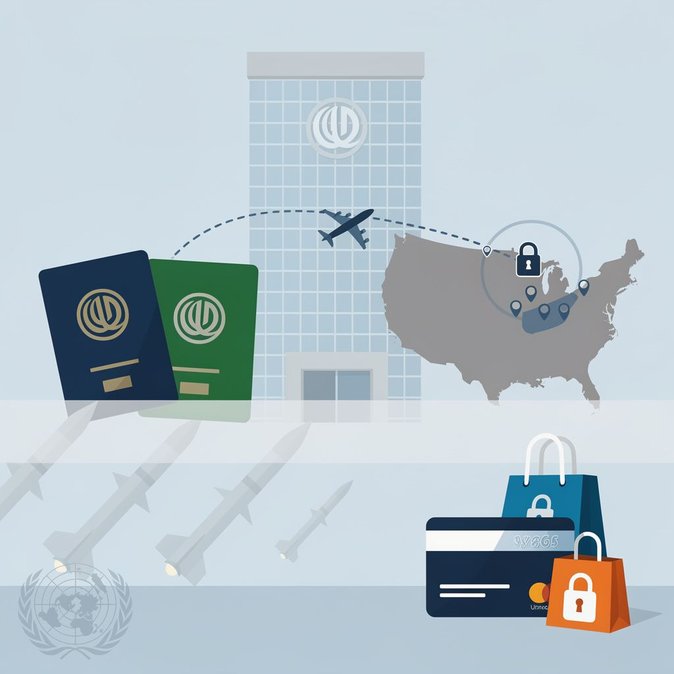
The U.S. State Department confirmed late Thursday that it has granted entry visas to Iranian President Masoud Pezeshkian, Foreign Minister Abbas Araghchi and roughly a dozen senior aides so they can address next week’s high-level session of the United Nations General Assembly in New York. Under the 1947 U.N. Headquarters Agreement, Washington is obliged to facilitate travel by foreign leaders invited to the U.N., yet the obligation is balanced by U.S. security statutes that allow the government to impose stringent travel curbs on hostile states. According to U.S. officials, the Iranian delegation’s movements will be limited to a narrow radius around Midtown Manhattan; they will be barred from visiting U.S. research facilities, purchasing luxury goods or travelling beyond a 25-mile zone without advance permission. Those restrictions mirror the measures imposed on Iran’s delegation in 2025, after the current U.S.–Iran conflict erupted over Tehran’s accelerated nuclear program and subsequent U.S.–Israeli air-strikes. For multinational companies with regional headquarters in New York, the decision averts a potential diplomatic showdown that could have led Iran to boycott the session and escalate tensions in the Persian Gulf, threatening global energy flows. At the same time, the tight restrictions underscore how little political space exists for substantive U.S.–Iran engagement outside the multilateral arena, meaning executives should not expect near-term easing of sanctions or simplified travel to Iran. Legal specialists note that the visas are classified as G-1 diplomatic visas valid only for U.N. business; they do not permit commercial activity, banking transactions or visits to U.S. universities without separate authorization. Firms hoping to meet Iranian officials on the sidelines will therefore need to arrange appointments inside the U.N. compound or at Iran’s mission on East 40th Street, and should be prepared for last-minute schedule changes if security conditions tighten.
Source: Associated Press