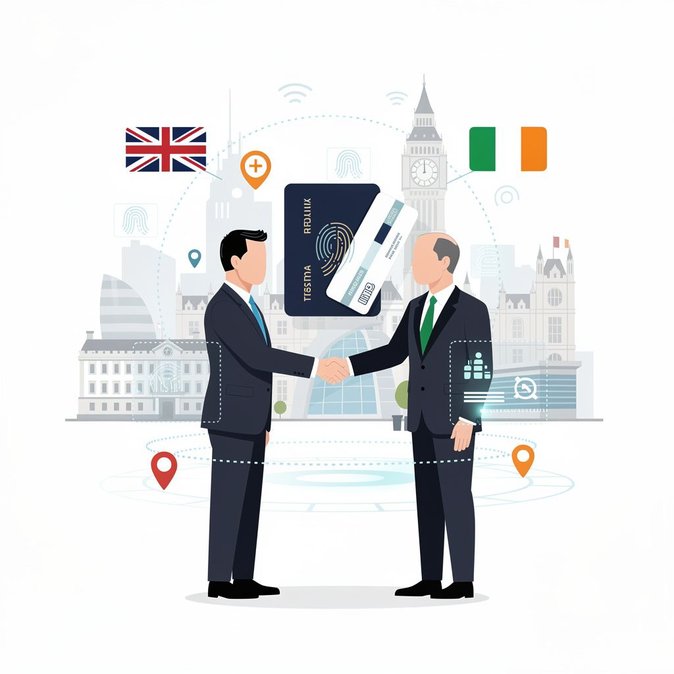
During his first face-to-face with Taoiseach Micheál Martin, UK Prime Minister Andy Burnham used a 18 September Downing Street meeting to signal a reset in bilateral relations – with mobility high on the agenda. According to the official communiqué, both leaders reaffirmed their commitment to the Common Travel Area (CTA) and agreed to intensify joint work on “security and trade” ahead of the next UK-Ireland Summit in early 2027. Although the press release focused on legacy issues and support for Ukraine, officials on both sides briefed journalists that discussions included streamlining digital passenger information and coordinating the rollout of the UK’s Electronic Travel Authorisation (ETA) scheme to avoid friction for Irish residents crossing into Britain from third countries. Business groups welcomed the mood music, noting that uncertainty over carrier-imposed passport checks and diverging visa rules has complicated staff deployments between Irish and UK offices since Brexit. A joint technical working group, dormant since February, will reportedly reconvene in October to explore mutual recognition of trusted-traveller programmes and to update guidance for CTA carriers. For mobility managers the takeaway is that no immediate rule changes were announced, but political momentum is building for a more business-friendly framework in 2027. Companies should continue to advise assignees that Irish citizens remain exempt from the UK ETA when travelling directly from Ireland but will need valid passports – not just national ID – when boarding flights from outside the CTA. The meeting also sets the tone for Ireland’s 2027 EU Presidency, during which Dublin is expected to champion smoother labour-mobility channels with neighbouring non-EU states – a policy area closely watched by multinationals operating all-island talent strategies.
Source: UK Prime Minister’s Office