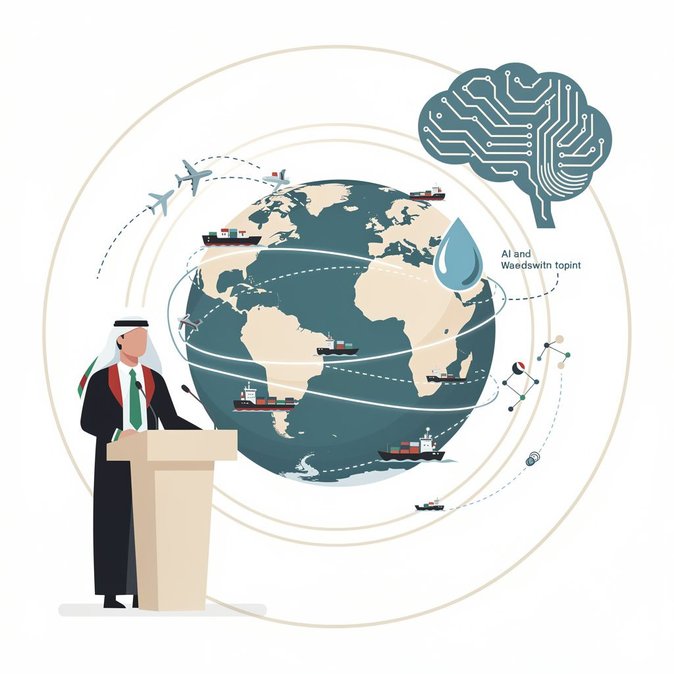
Speaking ahead of the UN General Assembly’s high-level week, UAE UN-ambassador Mohamed Abushahab said Abu Dhabi will use the New York summit to spotlight freedom of navigation and resilient supply chains—an issue that has moved from technocratic discussion to board-level urgency since the Strait of Hormuz disruptions began in July. Abushahab told The National that maintaining the “free flow of goods” is now integral to global peace and that the Security Council must defend rules-based maritime order. The UAE wants broader backing for multilateral action, including potential arms-embargo votes, to curb conflicts that spill into trade routes—from Sudan to the Red Sea and Hormuz. The delegation will also push for AI governance models that include developing-country voices and for recurring global water conferences, building momentum toward the Water 2026 summit that Abu Dhabi will co-host in December. For mobility managers, the signal is that the UAE intends to embed trade-lane security in the UN agenda—a move that, if successful, could translate into stronger international monitoring of maritime risk and faster conflict-zone insurance guidance for airlines. Corporate immigration teams note that UAE diplomats often pair such high-level security messaging with pitches for talent mobility. Expect side-events promoting the Golden Visa programme and the country’s expanded long-term residence categories as the Emirates seeks to reassure multinationals that it remains a stable HQ choice despite regional volatility. Whether the rhetoric converts into Security Council resolutions remains uncertain, but the diplomatic framing reinforces that shipping and aviation chokepoints are now front-of-mind in global governance forums—not just in industry white papers.
Source: The National