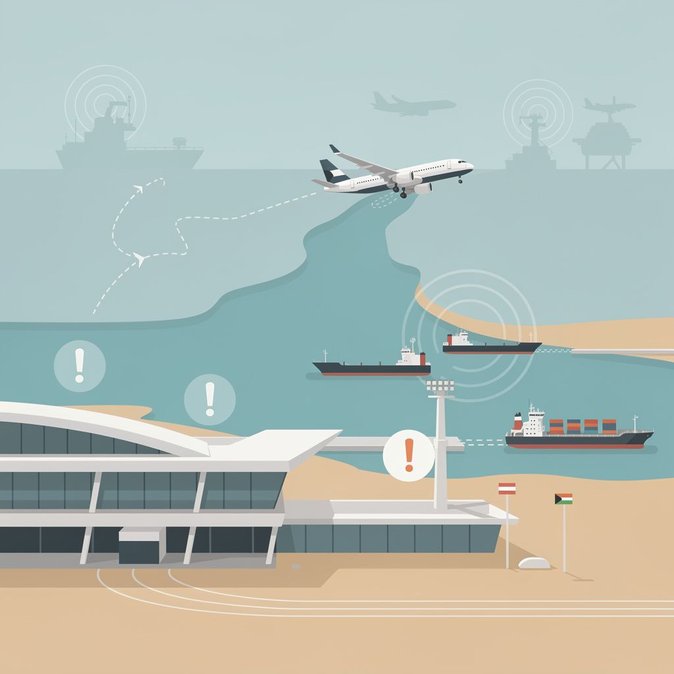
Gulf News’s rolling advisory for 22 September paints a nuanced but still-tense picture for anyone living, working or transiting through the Emirates. While Dubai International and Zayed International are operating normally, the paper’s editors warn that route-specific cancellations can appear with little notice as airlines react to NOTAMs and military advisories. Emirates, for example, has suspended Tehran and Mashhad indefinitely, whereas services to Bahrain and Kuwait continue. The maritime outlook remains fragile. Data shared with Gulf News show only 17 commodity vessels transited Hormuz over the weekend, down from 37 the previous week. Meanwhile, US Central Command says it redirected 109 commercial ships away from Iranian ports since 20 September, highlighting the cat-and-mouse element of sanctions enforcement. Two crew members were injured in Monday’s projectile strike on a tanker, again reminding insurers and shippers that low-visibility incidents can reshape routing economics overnight. Iran’s Revolutionary Guard Corps further upped the stakes, threatening to “change the geography of the war” if Washington escalates. Analysts interpret the phrase as code for potential strikes on Gulf oil infrastructure or cyber-operations against regional airports—scenarios that could spill directly into corporate travel and supply-chain plans. Practical take-aways compiled by Gulf News include checking in online, carrying medication in hand luggage, and confirming connecting flights separately—particularly for passengers headed to Saudi Arabia, Bahrain or Kuwait where knock-on disruptions have been most acute. The US State Department continues to advise Americans to “reconsider travel” to the UAE, a classification that affects corporate insurance coverage and may trigger additional employer-duty-of-care steps such as mandatory tracking apps or evacuation clauses in assignment contracts. With Hormuz still half-closed and rhetoric heating up ahead of the UN General Assembly, mobility managers should expect elevated volatility at least through the end of September and keep crisis-response playbooks current.
Source: Gulf News