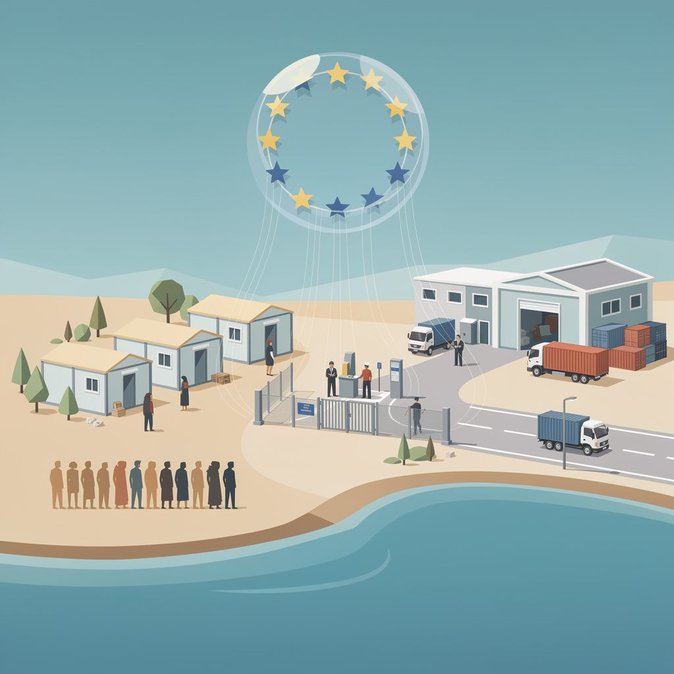
The European Commission on 9 September approved €114.7 million in emergency assistance for Spain to manage the humanitarian and security fallout from July’s unprecedented border surge into the autonomous city of Ceuta. The funds are being fast-tracked under the Asylum, Migration and Integration Fund (AMIF) and will be fully disbursed by 30 September, officials confirmed today. The package covers the costs of temporary accommodation, medical screening, and return logistics for roughly 9,000 individuals who crossed the frontier in a 48-hour period. It also finances 150 additional Guardia Civil officers, mobile fingerprint labs and biometric kits to enable accelerated identification – technology that the Interior Ministry says will later be redeployed at other high-pressure points such as the Canary Islands. Brussels’ rapid mobilisation is partly a political gesture: the July events sparked heated debate about whether Spain received sufficient solidarity compared with the support Italy obtained during its Lampedusa crisis earlier this year. Commission Vice-President Margaritis Schinas stressed that “segmented funding envelopes” allow for speed without waiting for the yearly budget cycle, signalling a new modus operandi that other frontline states could tap. For multinational employers with staff stationed in Ceuta’s free-trade zone, the grant should mean faster processing of pending asylum cases and fewer ad-hoc perimeter closures that disrupted cargo flows in August. Local authorities plan to expand throughput capacity at Tarajal gate, aiming to restore pre-crisis commuter permitting hours by mid-October. Mobility advisers should note, however, that Spain’s asylum backlog still exceeds 175,000 cases nationwide. While the new resources are welcome, legal-stay renewals for third-country national employees may continue to experience delays, reinforcing the value of early-filed applications and premium processing where available.