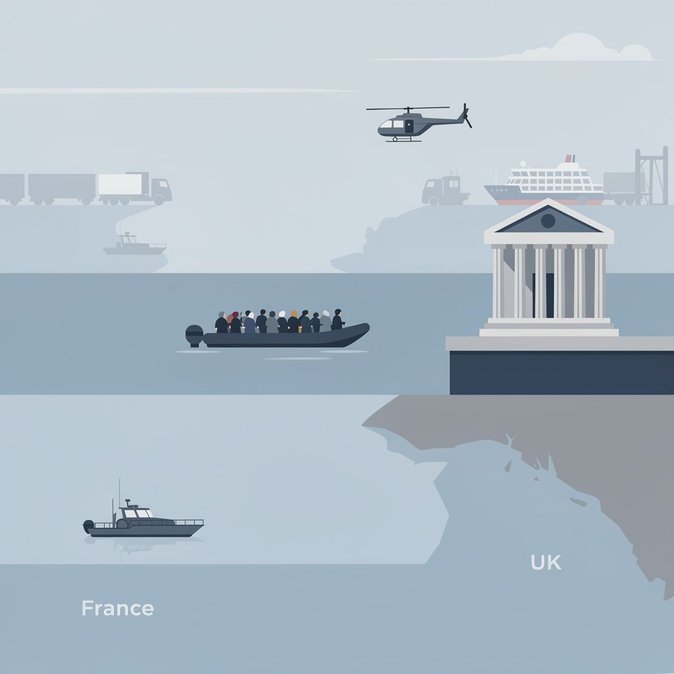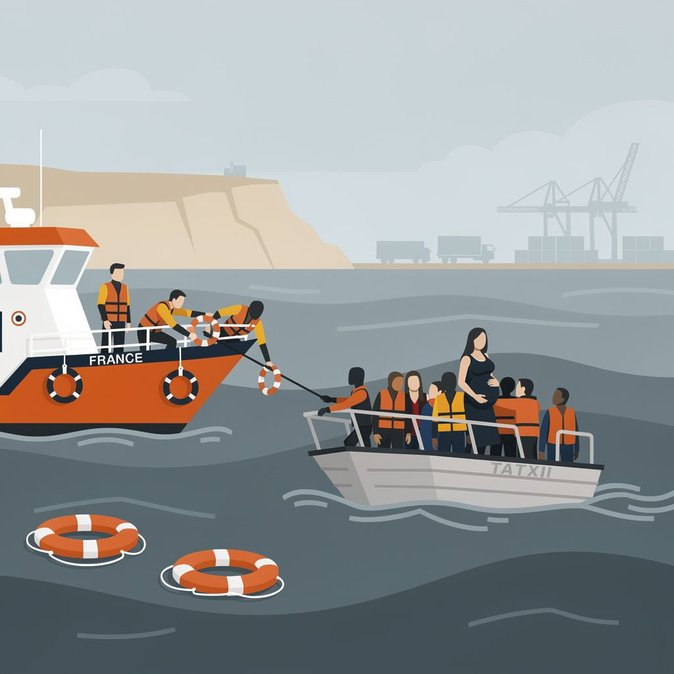
Emergency services in Pas-de-Calais were called out at 10:15 a.m. on Monday, 21 September, after a taxi-boat carrying around 45 migrants ran into difficulty just off the beach at Neufchâtel-Hardelot. According to local station Radio 6, three fire-fighters swam to stabilise panicked passengers while Boulogne-sur-Mer’s coastal rescue craft raced to the scene. Most occupants managed to scramble ashore but several remained in the water, prompting a full « Sauvetage côtiers » protocol. Among those treated was a 27-year-old pregnant Somali woman suffering abdominal pains, who was transferred to Boulogne hospital as a precaution. The taxi-boat later attempted to head back to sea before maritime gendarmes intercepted it for inspection under France’s new ‘semi-commercial craft’ rules introduced this summer. The incident comes amid a sharp rise in the use of rigid-hulled “taxi-boats” that depart from leisure marinas rather than isolated beaches, allowing smugglers to evade overnight coastal patrols. Paris and London signed a €90 million agreement in July to crack down on such departures, including drone surveillance and AI-assisted radar analytics along a 60-km stretch of shoreline. For global-mobility and assignment managers, the rescue underscores continuing operational volatility around the Channel coast. Companies moving staff or high-value freight via Calais, Boulogne or the A16 corridor should monitor maritime prefecture notices, as search-and-rescue operations often trigger temporary exclusion zones and traffic diversions. Travel risk policies should also address potential encounters with law-enforcement checkpoints that have become more frequent on approach roads to coastal towns.
Source: Radio 6