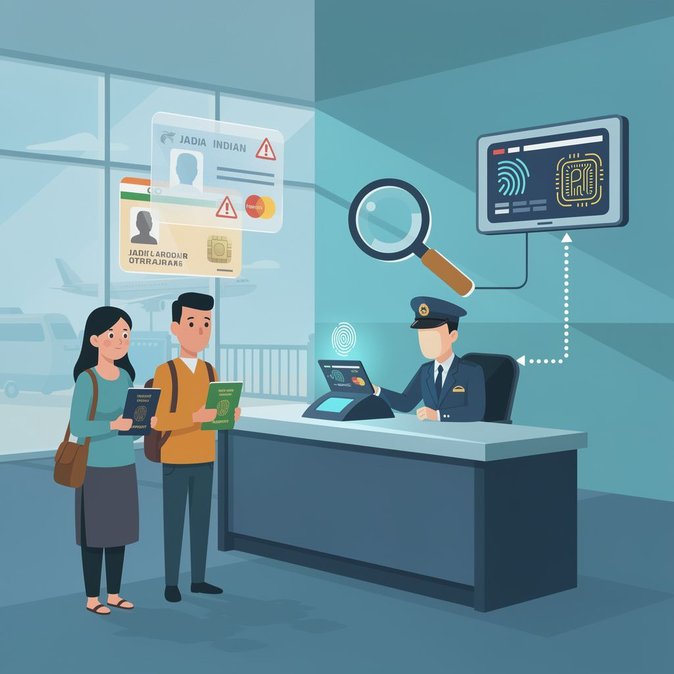
Mumbai’s Sahar police have arrested Sherbat Ali Shah Khan and Sujan Khan—both Afghan citizens—after immigration officials discovered they were travelling on Indian passports obtained through forged documents. The duo was detained on 17 September upon arrival from Dubai on Emirates flight EK-504, but details of the case were made public late on 21 September by The Times of India. Investigators allege the men originally entered India on short-term medical and tourist visas in 2016, overstayed, and then procured voter IDs, Aadhaar cards and PAN cards through a Mumbai-based agent. These identity papers were used to secure Indian passports listing Patna as birthplace, enabling multiple international trips, Afghan work-permits and, potentially, money-laundering activity. Security experts note the case underscores vulnerabilities in local identity-issuance ecosystems that can be exploited to obtain Indian travel documents—a serious concern given India’s plans to roll out e-passports nationwide. The Bureau of Immigration has circulated alerts to all airports, and the Regional Passport Office is auditing applications issued during the relevant period. For global mobility teams, the incident is a reminder that forged-document rings can compromise supply-chain workers or contractors. Corporations should tighten background-verification protocols, especially for hires claiming Indian nationality without verifiable birth records. Meanwhile, the Ministry of External Affairs is expected to mandate additional in-person verification for high-risk profiles until the new biometric passport system reaches full coverage in 2027. Police have seized the forged passports, digital devices and supporting documents; they are tracing the agent network under sections of the Passport Act and Indian Penal Code. The Afghans face up to eight years in prison and a lifetime ban on entering India.
Source: The Times of India