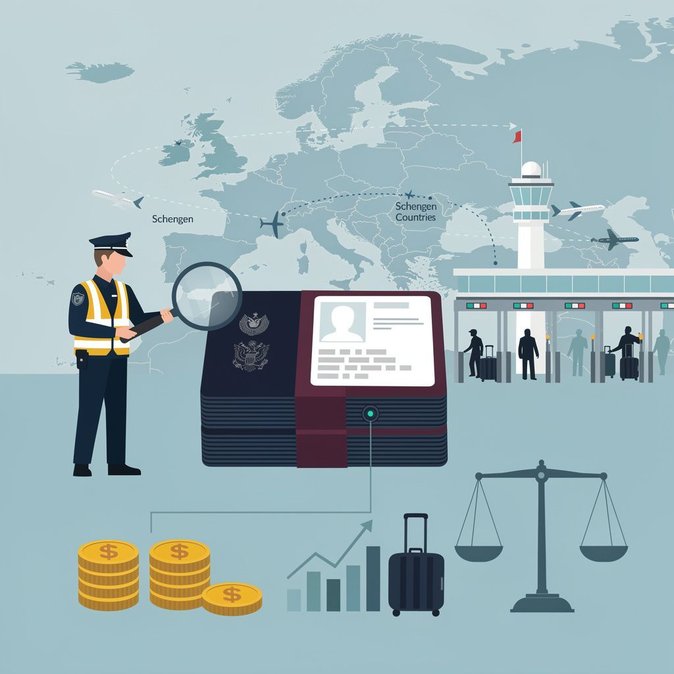
Belgian federal police investigators were among the 17 national forces that dismantled an alleged migrant-smuggling network moving people through Schengen airports with counterfeit travel documents, Europol announced on 24 September 2026. According to Europol, the organisation exploited the fact that many travellers first entered the European Union legally—often on genuine Schengen tourist visas—before discarding their real passports. Fake identities supplied by the ring then allowed individuals to board onward flights inside the Schengen Area and eventually to the United Kingdom. Searches in Austria, Italy, Spain and the UK resulted in six arrests, ten house raids and the seizure of hundreds of forged passports and ID cards, electronic equipment and large sums of cash. Although no arrests took place on Belgian soil, earlier inquiries by Belgium, Finland, Germany and the Netherlands had traced document and money flows that helped Europol link separate cases to the same criminal structure. A Vienna-based cell run by Afghan and Pakistani nationals allegedly laundered more than €2 million through front companies such as mobile-phone shops, while a Spanish cell is suspected of distributing more than 1,000 counterfeit documents worldwide. For corporate mobility managers the case is a reminder that document fraud remains a primary security concern at EU external borders and in airport transit zones. Airlines operating from Brussels Airport can expect increased scrutiny of travel documents in the short term as Belgian border police analyse intelligence gathered during the raids. Companies that relocate staff via A-to-B Schengen itineraries should review internal compliance checks to make sure original passports are retained and not replaced with photocopies during multi-city business trips. The operation is also the first large-scale test of Europol’s reinforced mandate on migrant smuggling, in force since March 2026. Under the new framework, financial investigations run in parallel with police actions, meaning companies unwittingly involved in laundering network proceeds—through cash remittances, telecom shop fronts or money-service businesses—could face asset-freeze orders or due-diligence audits. Belgian firms with retail outlets near major transport hubs should therefore verify know-your-customer procedures and suspicious-transaction reporting lines.
Source: 2EU Brussels