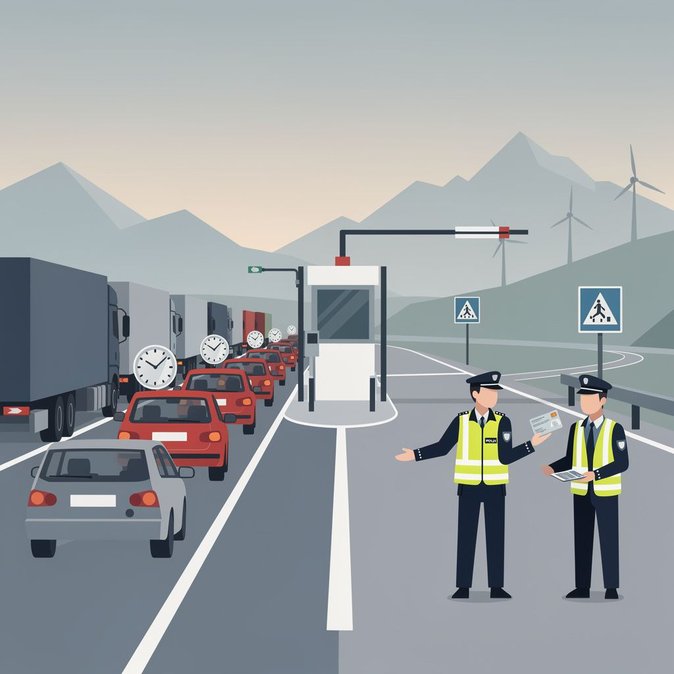
Real-time traffic feeds from road-operator ASFINAG on the evening of 25 September 2026 show that **intensified police controls at the A1/A8 Walserberg crossing between Salzburg and Bavaria are lengthening exit times by up to half an hour**. The rolling checks—part of Austria’s extended internal-border regime with Germany—created queues stretching several kilometres on the westbound carriageway from 17:30 until well after 20:00. While temporary Schengen-area border controls have been in place since 2015, the Interior Ministry stepped up a ‘border-area concept’ this summer after smuggling networks shifted routes northwards. A regulation published on 15 September already prolonged the legal basis for land-border checks with Czechia, Slovakia, Hungary and Slovenia until March 2027; in practice, however, the Germany–Austria frontier is policed under bilateral arrangements that allow random but systematic vehicle stops. For logistics operators and cross-border commuters, Friday’s slow-downs were a reminder that discretionary controls can flare unexpectedly. According to the Salzburg Chamber of Commerce, some 5,000 commercial vehicles and 20,000 private cars cross Walserberg daily, making even small inspection windows highly disruptive. Supply-chain managers are therefore building additional buffer time into just-in-time schedules, while travel-management firms advised passengers to avoid the late-afternoon departure peak or switch to rail where feasible. German authorities have signalled support for Austria’s tighter stance, citing a 12 percent rise in irregular entries detected in Bavaria year-to-date. Still, both sides insist the measures are risk-based and targeted. Mobile teams focus on high-risk profiles—overloaded vans, buses on certain corridors, and trucks flagged in EU security databases—rather than blanket stopping every vehicle. Corporate mobility specialists recommend that assignees carry passports rather than national ID cards and have residence permits readily available. Non-EU nationals driving company cars should also keep a recent employment confirmation on hand, as officers occasionally question the purpose of travel. Employers with frequent cross-border movements may consider enrolling drivers in Austria’s Trusted Carrier Programme, which offers expedited passage when vehicles meet specific security and compliance standards.