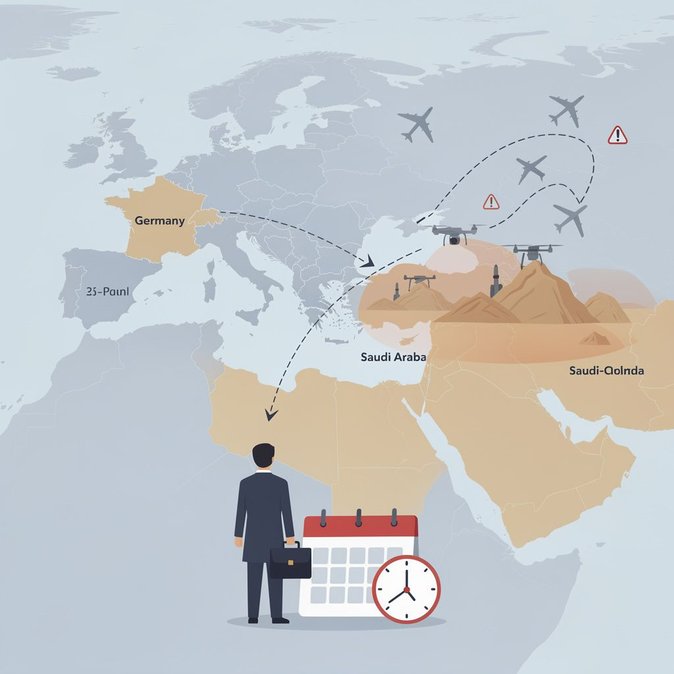
Germany’s Foreign Office has upgraded its security advice for Saudi Arabia after a surge in drone and rocket strikes attributed to Huthi forces operating from neighbouring Yemen. The notice—dated 26 September 2026—explicitly warns against all but essential travel to provinces along the Yemeni border and urges German citizens to reconsider non-critical trips to the rest of the kingdom. Since early September, oil installations, military bases and even civil airports in Al-Baha, Asir, Dschazan, Medina, Mekka, Nadschran and Tabuk have reportedly been targeted. While Saudi air-defence systems intercepted many projectiles, several explosions caused casualties and temporary flight diversions. The advisory notes that airspace closures could occur without notice, a scenario that would strand passengers and cargo alike. Lufthansa and Saudi Arabian Airlines have already introduced dynamic rerouting options for corporate accounts. The renewed hostilities come only three months after a high-profile U.S.–Iran de-escalation framework raised hopes for a calmer Gulf. Risk consultants now caution that logistics corridors used by German engineering firms—particularly those moving personnel to NEOM and other megaprojects—may face schedule volatility and higher insurance premiums. Employers with duty-of-care obligations are reviewing shelter-in-place protocols and satellite-phone inventories for staff already on site. Beyond security, the advisory reminds travellers that photographing critical infrastructure is illegal under Saudi law. Violations can lead to arrest—an often-overlooked compliance risk for expatriate project managers who document construction progress. The Foreign Office recommends registering in the ELEFAND crisis-preparedness list and monitoring local media for air-raid alerts. For global-mobility teams, the practical takeaway is twofold: build extra buffer days into rotation schedules for staff transiting via Jeddah or Riyadh, and confirm war-risk coverage with travel-insurance providers. Companies should also map alternative evacuation routes through Bahrain or the UAE should Saudi airports close temporarily.