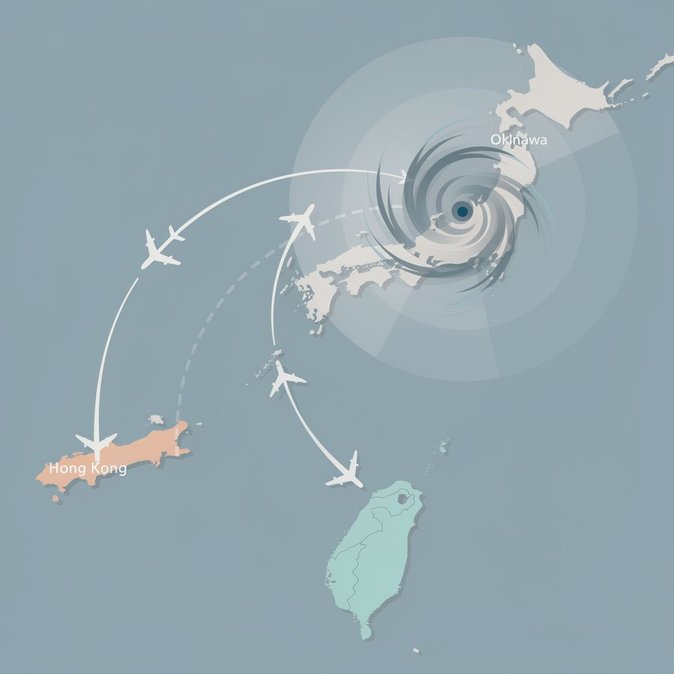
The Hong Kong Observatory confirmed at 20:00 HKT on September 27 that Super Typhoon Surigae (international name) had intensified to sustained winds of 220 km/h while tracking north-north-west towards Japan’s Ryukyu Islands. Although the storm is more than 1,500 km from Hong Kong, its wide circulation has already forced carriers to adjust regional schedules. Real-time data from China Airlines shows flight CI0910 (Hong Kong–Taipei) departing nearly an hour late on Sunday afternoon, while Trip.com lists cancellations for China Southern CZ3012 (Hong Kong–Shenyang) and several Okinawa-bound services. Greater Bay Airlines flight HB336 to Naha departed on schedule but with a revised flight path adding 30 minutes to avoid convective cells south of Kyushu. Sina Hong Kong reports that Japan’s Meteorological Agency expects heavy rain and gusts in Okinawa from late Monday, and local airports have warned of runway crosswind limits. Both Cathay Pacific and Hong Kong Airlines have issued travel-waiver policies allowing free rebooking or refunds for Japan-bound tickets dated 27 September to 1 October. For mobility and assignment managers the key is proactive communication. Staff headed for investor meetings in Tokyo or semiconductor plants in Kaohsiung should be advised to monitor airline apps and consider routing through Seoul or Shanghai. Employers should also review duty-of-care protocols: extended tarmac delays may exceed local working-hours regulations, and storm-related medical or hotel costs may need fast-track reimbursement.