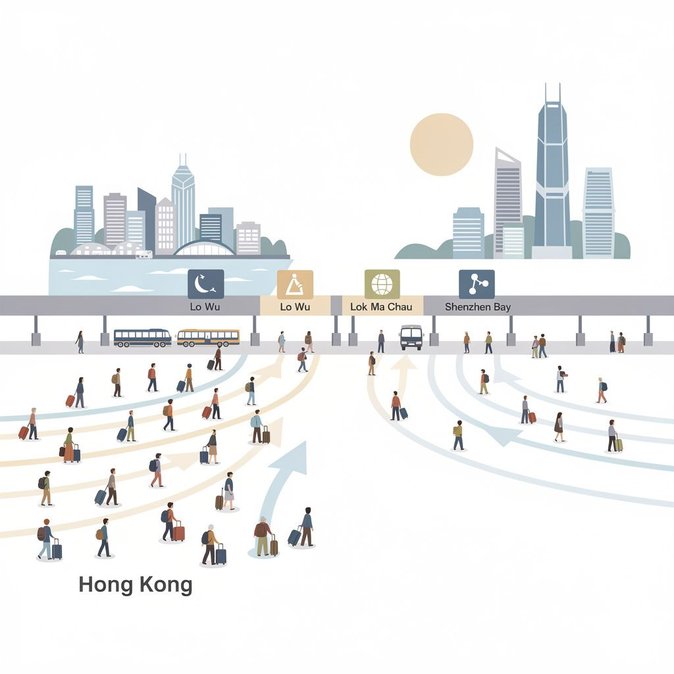
Hong Kong’s plan to create an integrated innovation corridor with Shenzhen has taken a decisive step forward. Speaking on September 27, 2026, Secretary for Innovation, Technology and Industry Sun Dong told Commercial Radio that the government will “ensure the actual flow of people begins no later than June 30 next year.” The commitment gives the long-discussed Hetao Shenzhen–Hong Kong Science and Technology Innovation Co-operation Zone a concrete timetable for opening its dedicated immigration fast-track, customs-bonded laboratories and point-to-point shuttle service across the Sham Chun River. Under the emerging arrangement, qualified researchers, data-centre engineers and corporate executives holding Hong Kong Identity Cards and a new cross-boundary electronic pass issued by Guangdong’s Public Security Bureau will be able to commute daily without applying for separate work permits on the Mainland side. The model mirrors existing arrangements in Qianhai but will add automatic e-Channel clearance and pre-approved vehicle quotas, cutting a typical 90-minute door-to-door journey to around 25 minutes. Companies registered in the zone will also be allowed to move prototypes and encrypted datasets duty-free, provided they lodge manifests on a newly built blockchain exchange platform. For multinationals weighing whether to base R&D teams in Hong Kong or neighbouring cities, the pilot removes a major pain-point: staff mobility. Semiconductor firms already committed to the HK$9-billion Micro-electronics Research & Development Institute (MRDI) say cross-border freedom will let them test wafers in Shenzhen and package them in Hong Kong on the same day, accelerating time-to-market. Professional-services giants anticipate demand for cross-border payroll, tax and housing advisory as expatriate packages become more mobile within the Greater Bay Area. The government still needs to finalise health-insurance portability, data-export approvals and an English interface for the mainland-side exit-entry kiosks. Yet Sun Dong’s deadline signals political backing at the highest level; Chief Executive John Lee has already asked Beijing to extend the scheme city-wide if the six-month pilot succeeds. Employers should begin mapping job roles that could benefit from dual-location contracts and revisiting assignment policies to reflect the new reality that a daily GBA commute could soon be as routine as crossing Victoria Harbour.
Source: South China Morning Post