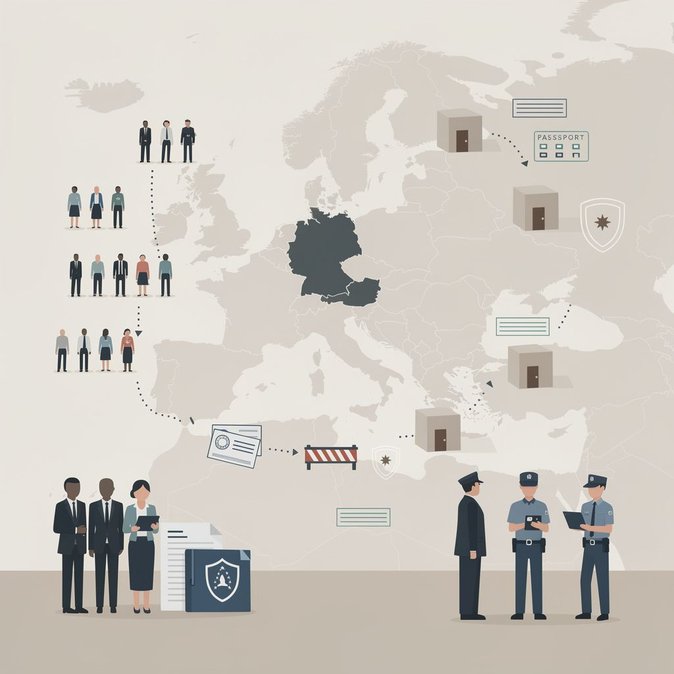
Germany’s interior minister Alexander Dobrindt (CSU) gathered 17 EU and associated interior ministers in Munich at the weekend for what he dubbed the “Munich Migration Meeting”. The closed-door talks – held just days before the EU Justice and Home Affairs Council in Brussels – focused on how member-states can speed up the removal of rejected asylum-seekers by creating so-called “Return Hubs” in third countries. Dobrindt told reporters on Monday, 28 September, that the meeting had “set the necessary impulse to tighten European migration policy” and that negotiations with potential host countries in East Africa were “well advanced”. Rwanda is regarded as the “hottest candidate”, while Uganda has also been mentioned by EU officials. Return-Hubs would allow EU states to transfer people who have no right to stay in Europe – even if their home countries refuse to take them back – to processing centres outside the Union. The concept is controversial; critics argue it externalises asylum obligations and could breach human-rights law, but a five-country alliance of Germany, Denmark, Austria, the Netherlands and Greece has been lobbying for the model since early 2026. The EU Return Regulation adopted in June already provides a legal basis for joint charter flights and partnerships with willing third states. At the Munich meeting ministers also discussed giving the EU border agency Frontex a broader mandate. Dobrindt wants the agency to evolve from a border-control force into a “full return agency” that would manage deportations directly from border-side screening as well as from transit states. Ireland, which currently holds the rotating EU Council presidency, backed the call but warned that a bigger Frontex will require “serious budget commitments” at a time of EU spending restraint. For Germany-based multinationals the debate matters because offshore processing could – if enacted – change the risk landscape for corporate mobility programmes that rely on intra-EU transfers, short-term Schengen visas and business travel for third-country nationals. Employers may need to review compliance processes and travel documentation for contractors who could be caught in enhanced exit-checks or return operations. Immigration lawyers also note that the political momentum behind Return Hubs could accelerate the government’s parallel review of Syrian protection status announced earlier this month, adding uncertainty for staff on humanitarian permits. The interior ministry aims to present a concrete blueprint before the December European Council. If Berlin secures an EU-level consensus, pilot hubs could open as early as 2027, officials said. Until then the proposal remains a flash-point in Germany’s domestic politics: the opposition Greens call it “outsourcing responsibility”, while the pro-business FDP argues it is “the only realistic path to restore the integrity of Schengen”. Corporate mobility teams should monitor the legislative timetable and prepare briefing notes for assignees likely to be affected.
Source: Perspektive Online / EUobserver