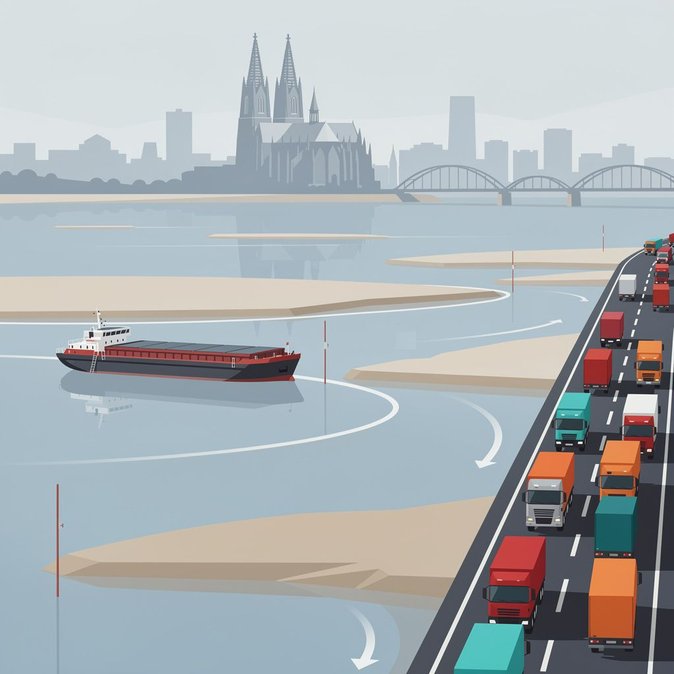
Germany’s powerhouse industrial corridor along the Rhine faces fresh logistics headaches after the Cologne gauge dropped to just 40 cm—its lowest reading since records began. In response, North-Rhine Westphalia’s transport ministry has prolonged the temporary suspension of the Sunday/Holiday lorry ban until at least 30 September, granting hauliers 24/7 road access to offset lost river capacity. The move highlights how climate-driven waterway constraints are rewriting the playbook for supply-chain planners. Bulk barges now sail at barely 40 % load to avoid grounding, forcing shippers to shift tonnage onto road and rail. Chemical giants around Ludwigshafen have already invoked force-majeure clauses for certain feedstocks, and logistics provider Hoyer says spot trucking prices on the Rotterdam–Ruhr lane have jumped 18 % week-on-week. Mobility and relocation managers should pay attention because prolonged suspension of the ‘Sonntagsfahrverbot’ may affect employee road-safety policies and expatriate relocation timetables. Removal firms are seizing the window to schedule heavy household-goods shipments on Sundays, which could ease housing move-ins but also create traffic bottlenecks in inner cities. From a compliance perspective, the exemption applies only to transports that demonstrably replace waterborne cargo. Police in Düsseldorf told GMN they will demand freight documents at roadside checks; fines for abuse can hit €2,000. Companies should therefore instruct carriers to carry Bills of Lading or ship-cancel notices. Longer term, logistics associations are pressing Berlin to accelerate dredging of key sections between Cologne and Mainz. Until that happens, mobility programmes with just-in-time staging through Rhine ports may need permanent contingency plans—especially for oversize freight like factory machinery or exhibition stands.
Source: Tagesschau/WDR