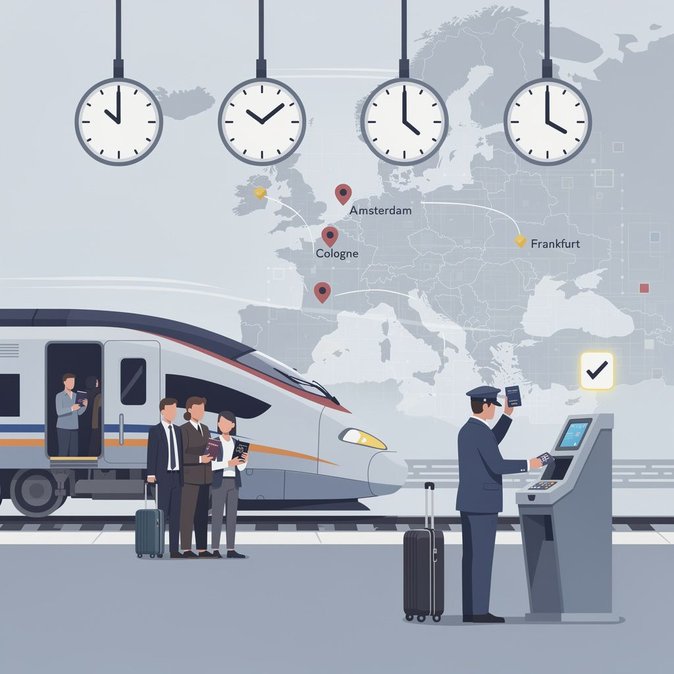
Early-morning Eurostar service updates on 27 September listed a string of delays at Amsterdam Centraal, Brussels-Midi and stations en route to Cologne and Frankfurt. The operator blamed ‘EU border control procedures’—a reference to intensified exit-checks for third-country passengers that Dutch authorities began piloting this month. For travellers connecting from the U.K. to Germany via the Netherlands, the bottleneck adds a further complication to a post-Brexit itinerary that already involves British exit passport stamping and French entry control at London St Pancras. On Sunday several trains left Amsterdam 25–40 minutes late, compressing transfer windows to Deutsche Bahn ICE services in Cologne. Eurostar, which now brands all through-trains to Germany as ‘extended network’ services, offered free rebooking for passengers who missed onward connections. Corporate travel managers are nevertheless reviewing policy guidance: many had shifted traffic off short-haul flights to rail to meet CO₂-reduction targets, counting on tight train-to-train transfers. The current pilot presages the introduction of the EU’s Entry/Exit System (EES) slated for spring 2027. Once fingerprint and facial-image capture becomes obligatory at the first Schengen border crossing, the dwell time for travellers changing trains in Amsterdam could increase further unless automated kiosks are installed. Companies with frequent London-to-Germany itineraries should therefore map alternatives via Paris Nord or consider reinstating direct flights where time-critical. Eurostar says it is working with the Dutch Border Police to add more staffed booths during morning peaks.
Source: Eurostar Travel Updates