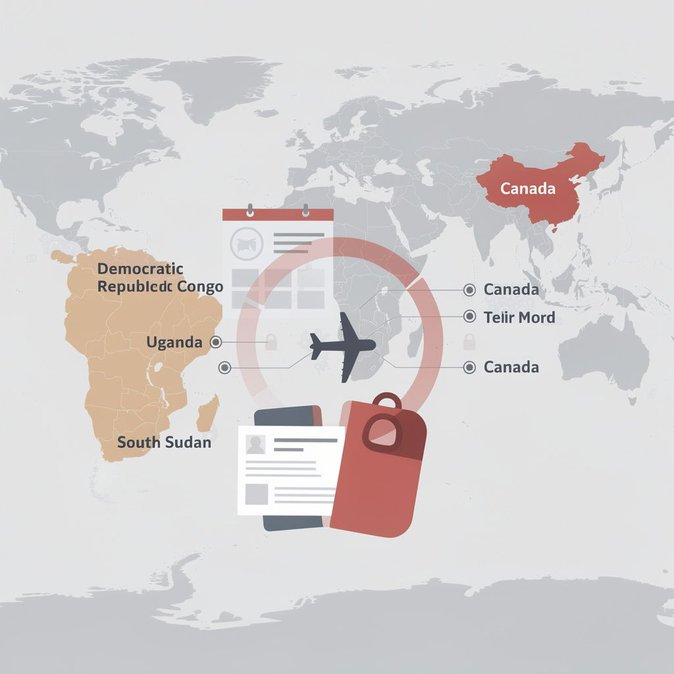
Immigration, Refugees and Citizenship Canada (IRCC) has renewed the special border controls first imposed in July to reduce the risk that Ebola could be imported into Canada. The notice, published late on September 28, 2026, keeps in place a suspension on issuing or finalising visas, work permits, study permits and electronic travel authorisations (eTAs) for anyone whose last country of residence was the Democratic Republic of Congo (DRC), Uganda or South Sudan during the 21 days before their application or intended travel. The extension runs to November 27, 2026 and affects both new and in-process applications. Travellers from the three high-risk countries who already hold a previously approved visa or eTA remain barred from boarding a flight to Canada while the measure is in force. IRCC says files may continue to be processed, but final decisions will be withheld until the suspension is lifted. Airline check-in systems have been instructed to deny boarding to affected passport holders, and the Canada Border Services Agency (CBSA) has issued operational bulletins to front-line officers. Although Canada has not recorded a confirmed Ebola case since 2014, the federal government argues that the public-health risk justifies continued precautions. The current Ebola outbreak in the eastern DRC has spread sporadically across land borders into Uganda and is being monitored by the World Health Organization as well as Canada’s Public Health Agency. Ottawa also notes that Canada lacks direct flights from the affected region, meaning that advance visa screening is its principal line of defence. For employers, the extension means ongoing uncertainty when recruiting talent based in Central Africa; global mobility managers should expect onboarding delays and may need to explore third-country remote-work options until the ban is lifted. Foreign students accepted by Canadian institutions must also postpone travel plans unless they can spend 21 days in a non-restricted country and obtain new medical clearance before departure. IRCC stresses that legitimate humanitarian requests will continue to be considered case-by-case, but applicants should build extra lead time into any Canadian immigration strategy that touches the three listed countries. Companies with cross-border operations are advised to communicate the policy clearly to affected travellers and to monitor further IRCC notices as the November deadline approaches.