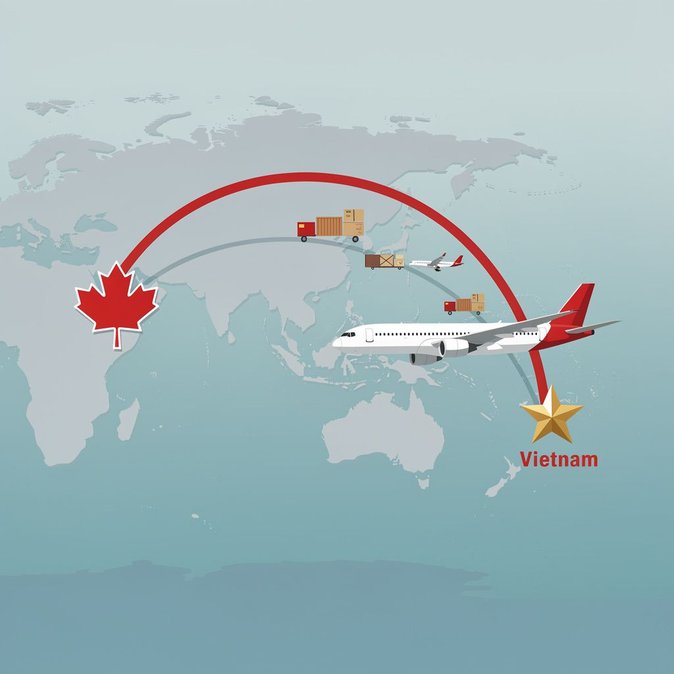
Air Canada on 28 September 2026 welcomed the signing of an expanded bilateral air-transport agreement between the governments of Canada and Vietnam. The deal increases the number of frequencies and designated carriers that can operate passenger and cargo services between the two countries and removes several capacity restrictions that had made direct routes commercially unviable. According to Air Canada’s Executive Vice-President and Chief Commercial Officer, Mark Galardo, the airline will now seek regulatory approvals with a view to launching non-stop service between Toronto or Vancouver and Ho Chi Minh City as early as summer 2027. While Canadians can already connect to Vietnam via Tokyo, Seoul or Hong Kong, a direct flight would shave three to five hours off total journey time—an attractive proposition for corporate travellers heading to one of Asia’s fastest-growing markets. Vietnam has been Canada’s largest trading partner in ASEAN since 2015; bilateral merchandise trade reached CAD $1.3 billion in 2025, up nearly 30 per cent year-on-year. The air-services upgrade therefore aligns with Ottawa’s Indo-Pacific Strategy, which emphasises deeper commercial links and people-to-people exchanges with Southeast Asia. From a mobility perspective, direct connectivity will simplify duty-of-care planning, lower airfare costs, and reduce the carbon footprint of long-haul business trips by eliminating an extra sector. Travel-management companies and global mobility teams should begin mapping potential uptake among project personnel, engineers and executives who frequently shuttle between Canadian headquarters and suppliers or subsidiaries in Vietnam. Pending launch, employers may also wish to review Vietnam’s e-visa system, which expanded to 90 nationalities in 2025 and allows single- or multiple-entry stays of up to 90 days—an increasingly popular option for Canadian passport holders conducting short-term work under Vietnam’s ‘business visitor’ category. The agreement must still be formalised through Transport Canada’s designation process and Vietnam’s Civil Aviation Authority, but industry analysts are optimistic. If Air Canada succeeds, Ho Chi Minh City would become the carrier’s third destination in mainland Southeast Asia, after Bangkok and Singapore, bolstering Canada’s overall aviation footprint in the region and offering new opportunities for cargo, tourism and talent exchange.
Source: TravelPress