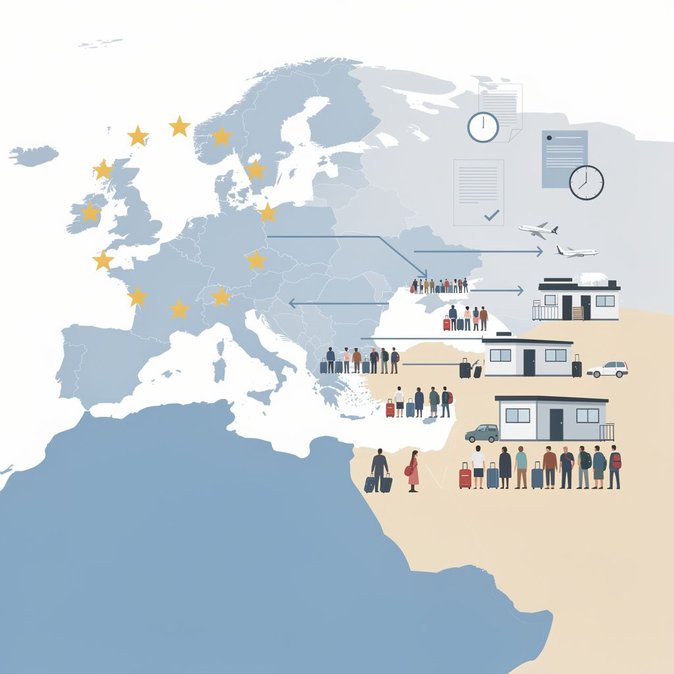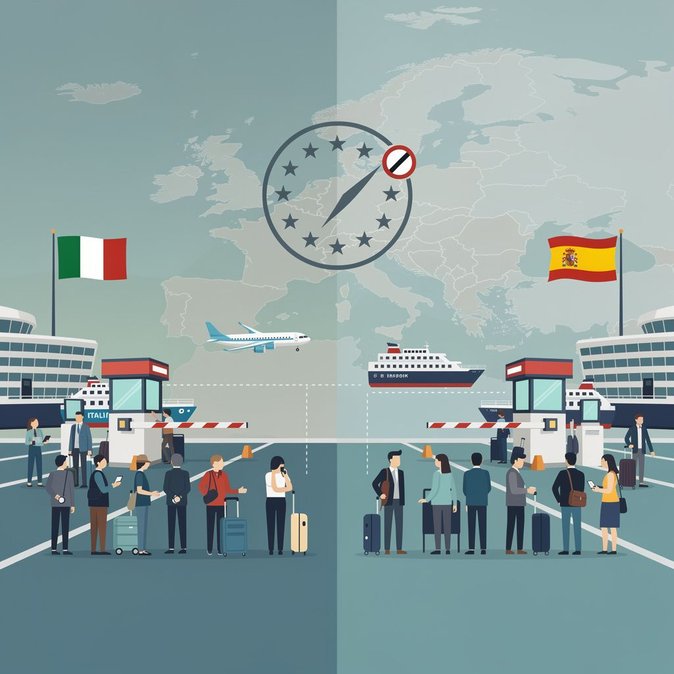
Italy’s Ministry of the Interior has issued a new decree extending the temporary re-introduction of border controls on all air and sea connections with Spain for a further 15 days, running from 1 to 16 October 2026. Interior Minister Matteo Piantedosi approved the measure late on 30 September after consulting the Inter-ministerial Committee for Immigration and Border Security. Rome first suspended Schengen rules on 1 August in response to the surge of irregular entries into Spain’s North-African enclave of Ceuta and the risk of secondary movements toward the Italian mainland. Under the extension, passengers arriving from Spanish airports and ports will continue to undergo systematic passport and security checks at Italian points of entry. Carriers have been instructed to verify travel documents prior to boarding, and airlines serving the Spain-Italy market report longer check-in and arrival queues as a result. The Spanish government has said it will maintain reciprocal controls on travellers from Italy. While Schengen allows temporary border controls of up to two months in exceptional circumstances, the rolling extensions have already drawn criticism from trade associations representing Italian exporters whose just-in-time supply chains depend on friction-free short-haul flights and ferry routes. Tour operators have also warned that the additional identity checks add between 20 and 40 minutes to airport processing times during the peak autumn conference season, with consequent risks of missed rail or onward air connections. Corporate travel managers should advise staff to allow extra time at departure and arrival points, carry passports rather than national ID cards where possible, and check that Advanced Passenger Information (API) has been correctly transmitted to carriers in order to avoid denied boarding. Multinationals moving staff between Italian and Spanish sites may also wish to review the fallback itineraries via France or Switzerland should delays escalate. The Interior Ministry has indicated that a further review will take place on 14 October. In the longer term, the episode underscores how quickly intra-Schengen travel can be disrupted by external migratory pressures. Businesses with mobile workforces are reminded to keep employee travel profiles up to date in emergency-notification systems and to monitor the European Commission’s Schengen dashboard for real-time changes in internal border regimes.
Source: Sky TG24