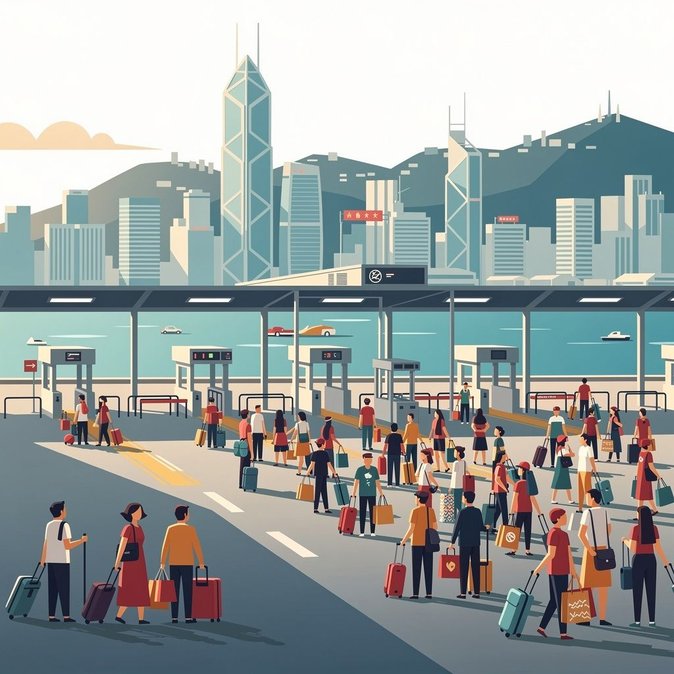
Hong Kong’s Immigration Department recorded 616,200 inbound and outbound movements up to 16:00 on the fourth day of the National Day ‘Golden Week’, October 4. Inbound travellers accounted for 337,500, with 173,000 arrivals coming from the mainland. The Lo Wu and Lok Ma Chau Spur Line checkpoints were the busiest, while most outbound flows used the airport and the bridge to Zhuhai and Macao. Morning figures had already shown 184,700 crossings by 10:00, underscoring how quickly volumes ramped up as holidaymakers filed into Hong Kong for shopping and theme-park visits. Financial Secretary Paul Chan noted in a blog post that 732,000 mainland visitor trips were logged in the first three days, an 8.4 % year-on-year rise, signalling a strong rebound in inbound tourism. For retailers, F&B operators and hotels, the mid-holiday surge means staffing rosters and inventory must remain at peak levels through 5 October, when daily crossings are forecast to top 650,000. Corporate mobility teams should warn assignees to budget extra time for land checkpoints and to consider the high-speed rail if travelling to Shenzhen or Guangzhou. Immigration steered traffic by opening all counters and fast-tracking elderly and family groups, but data dashboards still showed 30- to 40-minute waits at Lo Wu during midday peaks. Companies that rely on cross-border truck deliveries faced 20 % longer dwell times at Lok Ma Chau, according to freight forwarders interviewed. The October data confirm that Hong Kong’s inbound tourism recovery is firmly tied to mainland holiday periods and that land crossings—not the airport—now handle the bulk of leisure visitors. Mobility managers should align per-diem and hotel-block forecasts with China’s public-holiday calendar to control assignment costs.
Source: RTHK