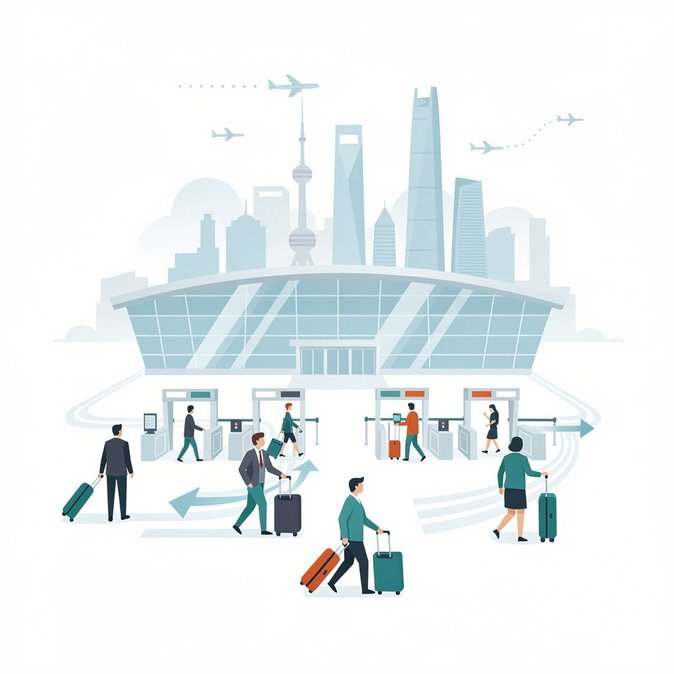
Shanghai Border Inspection said that between 1 and 3 October it processed 345,000 inbound and outbound passengers, with foreign arrivals reaching 44,000—an 18.9 % year-on-year jump. More than 70 % of foreign visitors used China’s 15-day unilateral visa-free regime or the 144/240-hour transit-visa waiver. Pudong and Hongqiao airports absorbed 94 % of the traffic, as Korean and Thai short-haul routes led outbound demand while North American and European services filled up with transit passengers taking advantage of waived fees. Shanghai police said they added green-lane counters for families and passengers requiring assistance and segmented waiting areas to keep queues below ten minutes. The figures suggest China’s post-pandemic visa-easing strategy is paying dividends in its commercial capital. Inbound leisure travel fuels duty-free sales, and business executives attending the upcoming China International Import Expo (CIIE) can now enter visa-free for pre-event meetings, reducing lead time for deal-making. Companies should note that although the 240-hour transit waiver allows movement across Jiangsu and Zhejiang, employment or media activities remain prohibited without a proper work visa. HR teams must pre-clear any staff planning client work while on the waiver to avoid penalties. Shanghai authorities are expected to publish additional port-of-entry guidance before the winter schedule. Travel managers are advised to monitor carrier advisories because airlines can refuse boarding if onward tickets fall outside the visa-free time window or involve non-eligible third-country routings.
Source: The Paper