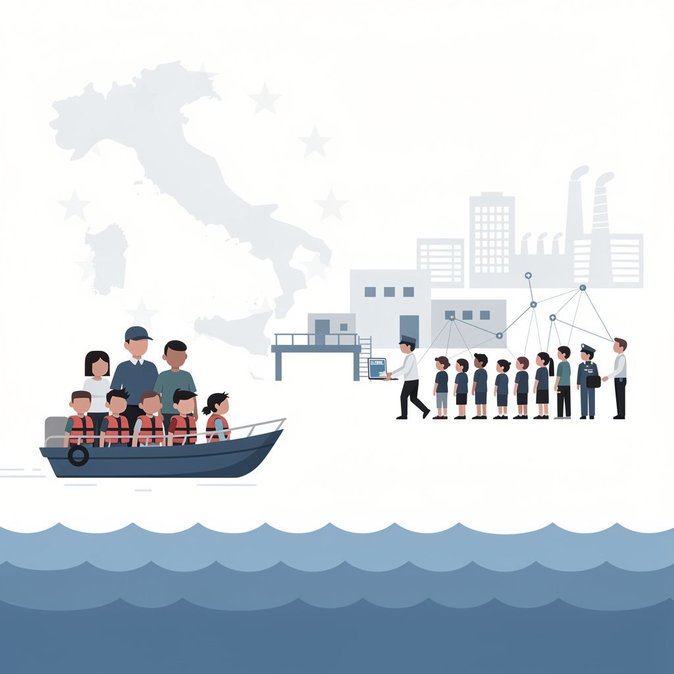
The Italian Ministry of the Interior’s latest dashboard, reported by Catholic news agency AgenSIR on 5 October, shows that 23,217 migrants have landed on Italian shores since 1 January 2026. Alarmingly, more than 20 percent—4,715 individuals—are unaccompanied minors, underscoring the growing child-protection challenge facing coastal prefectures and reception centres. Bangladesh remains the single largest country of origin (5,685 arrivals), followed by Algeria, Somalia, Eritrea and Sudan. While the overall arrival number is 18 percent lower than the same period in 2025, the proportion of minors has risen sharply, reflecting an emerging trend in Eastern Mediterranean smuggling routes that increasingly target family separation to exploit EU protection rules. For Italy’s global-mobility ecosystem the data have several implications. First, asylum offices in Sicily and Calabria are likely to face renewed backlogs, slowing the issuance of travel documents and refugee residence permits that allow onward intra-EU movement. Second, employers planning to hire asylum-seekers under Italy’s special-protection status will need to factor in longer waiting times before work-authorization receipts (ricevute) are issued. Third, multinational companies running corporate-social-responsibility (CSR) or humanitarian-staff deployments should prepare for tighter accommodation capacity near key landing sites such as Lampedusa. Rome has already channelled €45 million from the National Recovery and Resilience Plan into modular reception units for minors, but children’s-rights NGOs argue that specialised care staff are still insufficient. The government is expected to include faster family-reunification procedures in an upcoming migration decree to discourage smugglers from separating minors during embarkation in North Africa. At EU level, the figures offer fodder for continuing negotiations on the Migration and Asylum Pact, where Italy is lobbying for automatic relocation of unaccompanied minors to other Member States. Whether that solidarity mechanism materialises will shape the pressure on Italy’s border infrastructure heading into 2027.
Source: AgenSIR