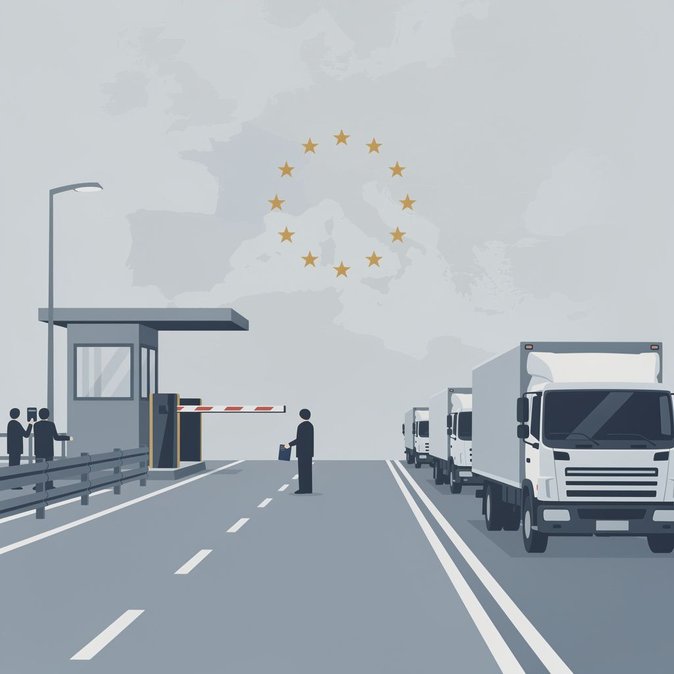
The European Commission’s live register of internal Schengen controls, updated on 5 October, reconfirms that Italy will keep systematic checks at its land border with Slovenia until at least 18 December 2026. Rome first reinstated the controls in June amid concerns that conflicts in the Middle East and persistent smuggling along the Balkan route could facilitate terrorist infiltration. Under Article 25 of the Schengen Borders Code, Member States may reintroduce internal controls for renewable six-month periods when faced with serious threats to public policy or internal security. Italy argues that mixed patrols and intelligence-sharing with Slovenia and Croatia have not yet stabilised flows, noting a 32 percent rise in irregular entries detected in Friuli-Venezia Giulia this summer. For cross-border commuters and logistics operators the extension translates into predictable but unavoidable delays. Waiting times for trucks at the Fernetti and Sant’Andrea crossings now average 40 minutes during morning peaks, compared with 10 minutes pre-June. Companies using the Trieste port hinterland have started rerouting time-sensitive cargo via Koper in Slovenia, adding cost but shaving off lead times. Business travellers should factor in passport checks even when holding EU ID cards and allow extra buffer when connecting to flights out of Venice or Trieste. Holders of Italian residence permits issued as electronic cards generally pass through the ‘EU/EEA’ lane, but those with paper receipts may be diverted to secondary inspection. While the Commission continues to remind Member States that internal checks must remain a «measure of last resort», it has so far accepted Italy’s risk assessment. A new evaluation is expected in early December; unless the security picture improves, a further six-month renewal into mid-2027 appears likely.