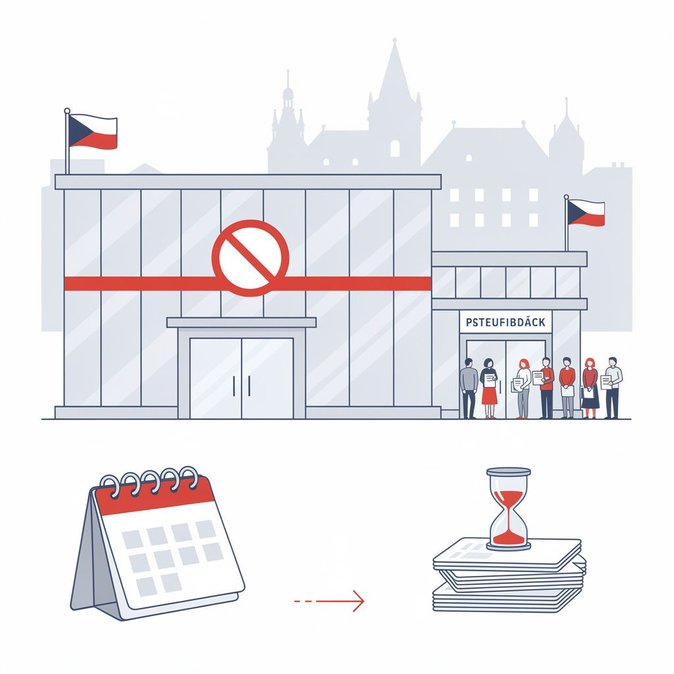
Foreign nationals living in or entering the Czech Republic faced unexpected disruption this week after the Ministry of the Interior’s Prague I – Žukovského branch shut its doors for three days. A banner posted on the ministry’s official Information Portal for Foreigners announced that the office would be “exceptionally closed from 5 to 7 October 2026 due to technical reasons.” The Žukovského branch is one of the busiest in the country, handling biometric residence permits, employee-card issuance and EU-citizen registrations for clients from Prague, Central Bohemia and several neighbouring regions. During the closure, foreigners without an appointment were instructed to visit the alternative Prague – Pekařská office, while those with pre-booked slots received rescheduling instructions by SMS. The ministry warned that walk-in capacity at Pekařská is limited and urged employers and relocation firms to defer non-urgent visits until after regular operations resume on Thursday, 8 October. Although officials did not specify the exact nature of the technical problem, local media report an electrical fault in the office’s biometric workstation network, which forced a total system shutdown. Contractors have been working around the clock to replace power modules and perform data-integrity checks on the national Foreigner Information System before reopening. For HR departments managing work-permit renewals and blue-card conversions, the three-day outage may create a filing backlog. Labour offices have indicated they will apply “administrative tolerance,” meaning deadlines that fall within the closure window will automatically extend to the next working day. Nevertheless, practitioners recommend attaching a screenshot of the ministry’s closure notice when explaining late submissions. The incident highlights the Czech Republic’s growing dependence on a handful of high-volume service points. Business associations renewed calls for the ministry to accelerate its digitisation plan, including remote biometric enrolment kiosks and expanded online filing for status changes. Until such upgrades materialise, companies remain vulnerable to facility-specific breakdowns that can stall critical mobility timelines.