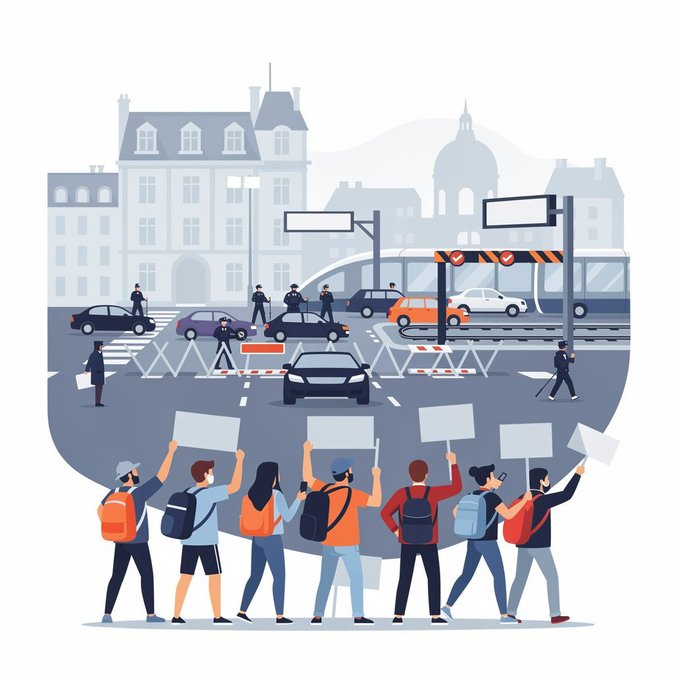
The Independent reports that a wave of high-school protests, which began in mid-September over overcrowded classrooms and crumbling facilities, reached new levels of violence on 6–7 October. Riot police deployed tear gas and water cannon in Paris, Strasbourg and Lyon, with at least 260,000 demonstrators recorded by the interior ministry. While the UK Foreign, Commonwealth & Development Office has not issued a formal warning, it has reiterated standard guidance to ‘monitor local media and avoid demonstrations’. The US Embassy in Paris has gone further, classifying the unrest as a security incident that warrants “increased caution” and advising travellers to stay clear of protest flashpoints, many of which are adjacent to major transport hubs. The practical mobility impact includes sporadic road closures on the Périphérique, delays to suburban bus routes and temporary lockdowns of métro entrances near occupied schools. Several regional rail services were halted briefly on Tuesday evening after protesters spilled onto the tracks. Companies with assignees or short-term travellers in France should reactivate duty-of-care check-ins, refresh contact trees and remind staff that even peaceful marches can escalate quickly. Insurers note that trip-cancellation cover is not triggered unless official government advice changes, so proactive itinerary tweaks made now are likely to be at the traveller’s own cost. With unions calling for an ‘Act IV’ mobilisation on 8 October, the situation remains fluid. Travellers scheduled to transit central Paris on Thursday may wish to reroute via peripheral stations or book earlier trains to avoid afternoon demonstrations.
Source: The Independent