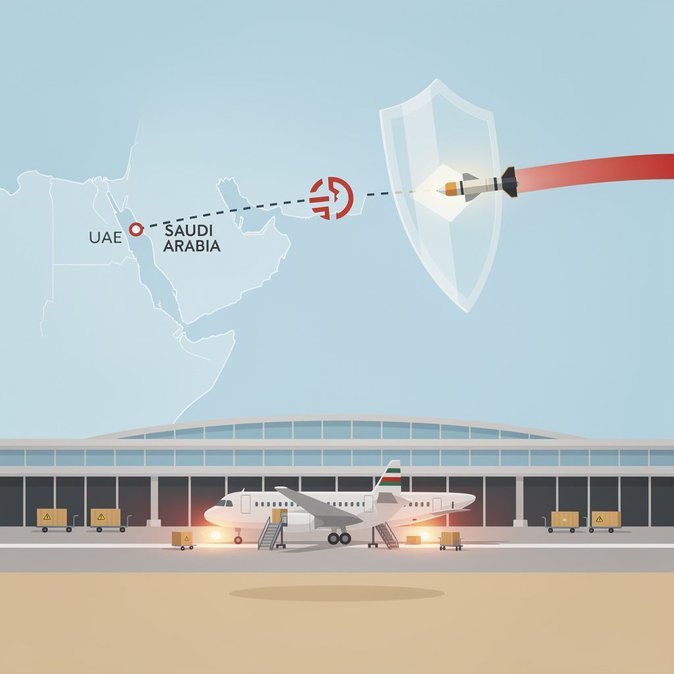
Etihad Airways and flydubai were forced to scrap multiple rotations to Riyadh on 8 October after Yemen’s Houthi militia claimed a ballistic-missile hit on King Khalid International Airport. Khaleej Times confirms flight EY555 (Abu Dhabi–Riyadh) and its return sector EY556 are on indefinite delay, while flydubai cancelled FZ 855/856. Saudi authorities reported three fatalities and more than 30 injuries from missile debris across two airports. Although the UAE is not directly targeted, the incident underlines the growing radius of conflict-zone risk affecting Gulf business travel. The closure of Riyadh’s airspace triggered immediate knock-ons: diverted aircraft, potential crew-duty-time exceedances and slot backlogs that could ripple through evening banks at Abu Dhabi and Dubai hubs. Mobility impact: UAE-based executives with day-return meetings in Riyadh must now re-route via Dammam or postpone travel. Cargo shippers face delays for time-sensitive consignments such as pharmaceuticals and auto parts that normally transit Etihad Cargo’s Abu Dhabi–Riyadh freighter. Travel-risk managers should raise alert levels for staff transiting Saudi airports and validate emergency-extraction plans. Strategic takeaway: The episode demonstrates how non-state actors can disrupt Gulf mobility with a single strike. Airlines are reviewing contingency corridors and may increase schedule padding or adopt secondary airports. Companies should build flexibility into Saudi-UAE shuttle operations, purchase fully-refundable fares, and brief travellers on shelter-in-place procedures should further attacks occur.
Source: Khaleej Times